



| Quantity: | |
|---|---|
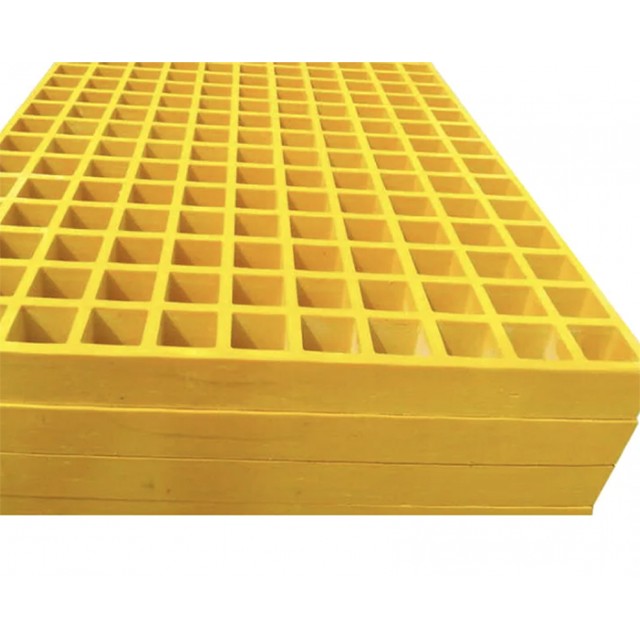
Our FRP Grating boasts excellent comprehensive performance that stands out in the market. Firstly, it features superior corrosion resistance, which can effectively resist erosion from acids, alkalis, salts, chemicals and marine saltwater, avoiding the rust and decay problems that plague metal gratings, making it particularly suitable for harsh corrosive environments such as chemical plants, wastewater treatment facilities and offshore platforms. Secondly, it has an excellent strength-to-weight ratio: with a specific gravity of about 1.8, it weighs only 1/4 of steel and 2/3 of aluminum, but its absolute strength is comparable to ordinary steel and even ten times that of rigid polyvinyl chloride, which greatly reduces transportation and installation costs and labor intensity. In addition, it is non-conductive and non-magnetic, providing a safe operating environment for electrical facilities such as power stations and substations, and eliminating the risk of electric shock accidents.

We offer two main types of FRP Grating to meet different application needs: Molded FRP Grating and Pultruded FRP Grating. Molded FRP Grating is formed by one-piece molding, with uniform bidirectional strength, excellent impact resistance and slip resistance, and is ideal for pedestrian walkways, maintenance platforms and drainage covers where comprehensive performance is required. Pultruded FRP Grating is manufactured by pulling continuous glass fiber strands through a resin bath and heated die, with higher longitudinal load-bearing capacity and span performance, suitable for heavy-duty scenarios such as large-span platforms and heavy-load equipment bases. Both types can be customized with different surface treatments, including grit-top, sanded and checkered surfaces, to further enhance slip resistance and adapt to wet, oily and other harsh working conditions.
With its versatility, our FRP Grating covers a wide range of application scenarios. In industrial fields, it is widely used as walkways, maintenance platforms and trench covers in chemical plants, refineries, power stations and mining sites. In marine and offshore environments, it is applied to ship decks, docks, offshore oil platforms and other facilities, resisting the erosion of saltwater and ultraviolet radiation effectively. In public infrastructure and civil fields, it is used for pedestrian overpasses, drainage grates, garden decks, greenhouse walkways and food processing plant floors, thanks to its hygiene, easy cleaning and low maintenance characteristics. It also plays an important role in construction sites as scaffolding and temporary walkways, benefiting from its lightweight and easy installation advantages.


