
Views: 0 Author: Site Editor Publish Time: 2026-09-23 Origin: Site


Procuring sub-standard fencing carries severe operational risks. Premature corrosion and weld failures lead to expensive replacement cycles and create immediate security vulnerabilities across your perimeter. Procurement managers and project specifiers face a distinct challenge when verifying supplier claims. Visual inspections of sample cuts are completely insufficient. You cannot determine long-term durability without understanding the underlying production methodologies. A reliable procurement decision requires a deep technical evaluation. You must assess the three core pillars of steel fence manufacturing. These include raw material grading, welding integrity, and multi-stage surface treatment protocols. Mastering these elements ensures your perimeter defense performs exactly as engineered.
Material Specification Dictates Lifespan: The choice between tubular and solid steel, alongside specific yield strengths, establishes the baseline for structural integrity and project suitability.
Welding Quality is the Primary Point of Failure: Understanding the operational differences between MIG, TIG, and flux core welding—and the role of automated jig systems—is critical for assessing joint durability and production scalability.
Surface Preparation Outweighs Coating Type: Even premium powder coats will fail rapidly without rigorous chemical or mechanical pre-treatment and proper primer application to inhibit substrate corrosion.
Long-Term Value Over Initial Price: Evaluating manufacturers based on their adherence to strict fabrication, consistent coating application, and finishing standards significantly reduces long-term maintenance liabilities.
Table of Contents
Material selection is the foundation of a reliable steel fence. The correct steel grade depends on the application, with factors such as tensile strength, yield strength, and material thickness determining overall performance. Buyers should request mill test reports to verify steel quality and ensure consistent properties. Low-carbon steel offers good weldability, while high-carbon steel provides strength but may become brittle during processing. Standards such as ASTM A500 help confirm structural requirements and ensure the steel can withstand expected loads without permanent deformation.
Steel fence fabrication starts with precision cutting, bending, and forming processes. Modern factories use laser cutting, CNC bending, and punching equipment to create accurate components and maintain consistent panel dimensions. High-quality processing reduces fitting issues, prevents welding stress, and ensures smooth assembly. Compared with traditional punching, laser cutting provides cleaner edges and more accurate holes, improving welding quality and reducing the risk of corrosion caused by gaps or deformation.
Buyers must choose between tubular and solid steel profiles. Tubular steel weighs less and generally costs less to transport. However, it remains highly prone to internal corrosion. Moisture accumulates inside the tubes if manufacturers leave the ends unsealed. Solid steel offers maximum impact resistance for high-security zones. It carries significant weight, driving up material and shipping expenses. You must specify profiles based on strict project constraints. Consider security requirements, budget limits, and environmental exposure. Coastal environments destroy unsealed tubular steel rapidly. High-impact areas require the sheer mass of solid profiles.
Feature | Tubular Steel Profiles | Solid Steel Profiles |
|---|---|---|
Weight & Handling | Lightweight, easier to handle and install on site. | Heavyweight, requires robust handling equipment like telehandlers. |
Impact Resistance | Moderate; prone to denting under heavy blunt force. | Maximum; resists severe blunt force trauma and vehicular impact. |
Corrosion Vulnerability | High internal risk if ends remain unsealed or ungalvanized. | Surface level only; no internal cavities for moisture pooling. |
Material Efficiency | High strength-to-weight ratio. | Low strength-to-weight ratio; uses significantly more raw material. |
Ideal Application | Commercial boundaries, ornamental designs, standard perimeters. | High-security perimeters, crash-rated barriers, prison enclosures. |
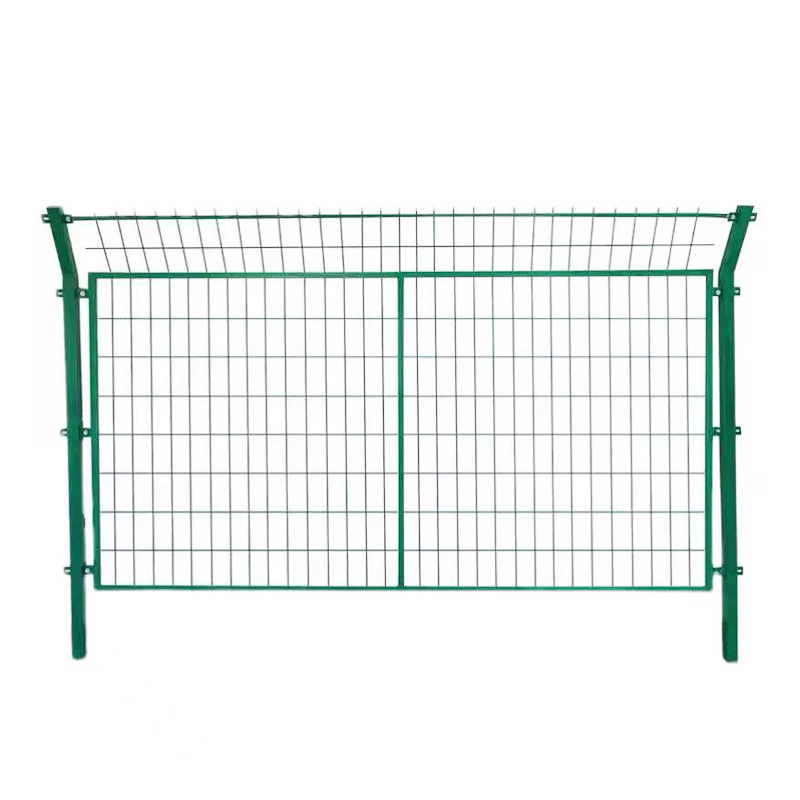

MIG and TIG are the two common welding methods used in steel fence manufacturing. MIG welding offers faster production speed and strong penetration, making it suitable for most commercial fencing projects. TIG welding provides cleaner and more precise welds, which is better for decorative or custom designs. The right method depends on production volume and appearance requirements. Proper control of heat input is also important, as incorrect welding settings can weaken the steel or cause defects such as burn-through or poor fusion.
Modern production relies on automation to improve efficiency and consistency. Robotic welding systems and precision jigs help maintain accurate dimensions, reduce human errors, and support large-volume orders. Manual welding is still valuable for customized or decorative fence designs where flexibility is needed. Properly calibrated welding fixtures are essential to prevent panel deformation and ensure smooth installation. Regular equipment checks help avoid alignment issues that can affect final product quality.
Welding quality directly affects the strength and durability of steel fences. Common defects such as porosity, undercut, and incomplete penetration can weaken joints and reduce structural reliability. Buyers should request quality inspection records, including non-destructive testing reports, to verify weld integrity. Before coating, all weld areas must be properly cleaned and free of slag, as remaining residue can cause coating failure, expose bare metal, and lead to early rust.
Weld Defect | Root Cause in Manufacturing | Field Consequence |
|---|---|---|
Porosity | Inadequate shielding gas coverage or dirty base metal. | Internal joint weakness; prone to snapping under lateral loads. |
Undercutting | Excessive welding current or improper torch angle. | Creates a stress riser; metal tears at the weld toe during impact. |
Incomplete Penetration | Travel speed too fast or heat input too low. | Joint looks solid but lacks core fusion; fails under minimal stress. |
Retained Slag | Poor post-weld mechanical cleaning. | Coating delamination; rapid onset of localized rust. |
Surface preparation dictates the ultimate lifespan of any Steel Fence. It is the single most critical factor in corrosion prevention. Facilities utilize aggressive mechanical and chemical cleaning methods. Mechanical methods include high-pressure sandblasting or steel shot blasting. Chemical methods rely on multi-stage phosphating and wash primers. These processes strip away mill scale, manufacturing oils, and welding residue.
Proper surface preparation is essential for long-lasting coating performance. Poor preparation can cause rust and coating peeling even when using high-quality paints. Processes such as shot blasting create a rough surface profile that improves primer adhesion, while chemical phosphating adds extra corrosion protection. A complete pretreatment line usually includes cleaning, rinsing, phosphating, and sealing steps. Regular chemical checks and production records help ensure the surface is properly prepared before coating.
Hot-dip galvanizing provides strong corrosion protection by coating the entire steel structure with a zinc layer after fabrication. The molten zinc forms a bonded alloy layer with the steel, protecting both internal and external surfaces. Pre-galvanized steel offers a smoother finish and is easier for powder coating, but welded areas may lose zinc protection and require additional repair coatings. For harsh environments such as coastal or industrial areas, hot-dip galvanizing offers better long-term durability. The zinc coating works as a sacrificial layer to protect the steel, with thickness requirements typically following standards such as ASTM A123.
Premium manufacturers use a multi-layer coating process to improve steel fence durability. A zinc-rich primer is applied first to protect the metal, followed by polyester or polyurethane powder coating for UV resistance and surface protection. Automated spray systems ensure even coating thickness, while controlled curing ovens create a strong, durable finish. Proper curing is critical—under-cured coatings may chip easily, while over-cured coatings can become brittle. The curing temperature and time must be adjusted based on the steel profile thickness to achieve reliable long-term performance.
Coating quality should be verified through independent test data and inspection records. Buyers should request salt spray test results and adhesion test reports to confirm coating durability and bonding strength. Manufacturers should also meet environmental requirements, including proper VOC control and wastewater treatment. Choosing a supplier with reliable quality management and compliance records helps reduce coating failures and long-term maintenance risks.
Reliable manufacturers should provide complete certifications, quality records, and production documentation. Buyers should check ISO 9001 certification, welding qualifications, coating test reports, and factory inspection procedures. A well-organized production process separates raw material processing from coating areas to prevent contamination and coating defects. Final inspections should verify dimensions, weld quality, and coating thickness before shipment. Proper packaging with protective materials and secure pallets is also essential to prevent scratches and damage during transportation.
Supplier production capacity directly affects delivery reliability and project timelines. Buyers should evaluate factory equipment, automation level, and actual output capacity before placing orders. Modern welding machines, CNC equipment, and efficient production lines help maintain consistent quality and lead times. Avoid suppliers promising unrealistic delivery schedules, as rushed production may reduce coating quality or inspection standards. Request a detailed production plan and review the factory workflow to ensure processes such as surface treatment, curing, and final inspection have enough time to meet quality requirements.
Request detailed technical specifications and mill test reports to verify exact carbon content and yield strength.
Demand physical cross-section samples to measure internal coating thickness and verify weld penetration.
Schedule a comprehensive facility audit to inspect surface preparation chemical baths and curing oven temperature logs.
Require AWS welder certifications and independent ASTM salt spray test results before signing any procurement contract.
A: Hot-dip galvanizing involves complete post-fabrication submersion in molten zinc. This coats both internal and external surfaces, protecting all welds. Pre-galvanized steel uses tubing coated before fabrication. Welding burns off the zinc at the joints, leaving them vulnerable. These exposed welds require a secondary cold-galvanizing spray to prevent rapid rusting.
A: The welding method determines joint penetration and structural strength. MIG welding provides deep penetration suitable for heavy materials. Proper execution prevents porosity and undercutting. Complete slag removal is mandatory before coating. Any leftover weld slag prevents paint adhesion, causing the coating to flake and exposing the joint to immediate corrosion.
A: Peeling directly results from poor surface preparation. If manufacturers fail to remove mill scale, oils, or weld slag, the powder coat cannot adhere to the steel. Skipping the zinc-rich primer coat also causes failure. Inconsistent oven temperatures during curing leave the powder brittle, leading to rapid flaking upon physical impact.
A: Commercial fences typically utilize 14-gauge to 11-gauge steel. Lower gauge numbers indicate thicker metal. An 11-gauge profile offers superior physical robustness and impact resistance for high-security areas. A 14-gauge profile provides adequate strength for standard commercial boundaries while remaining cost-effective and easier to handle during installation.
A: You must request specific documentation. Ask for AWS welder certifications to ensure structural competence. Demand independent ASTM salt spray test results to verify coating durability. Review their machinery capabilities and ISO 9001 compliance. Finally, request detailed QA inspection reports covering weld cleaning, dimensional tolerances, and coating mil thickness.
A: Solid steel provides unmatched heavy impact resistance, making it ideal for crash-rated, high-security perimeters. However, it is exceptionally heavy and expensive. Heavy-gauge tubular steel offers a highly efficient structural design. It provides excellent security for most commercial applications at a lower weight, provided the tube ends are properly sealed against moisture.


