
Views: 0 Author: Site Editor Publish Time: 2025-10-07 Origin: Site


Steel grating is an essential component in various industrial applications, offering durability, strength, and versatility. With the increasing demand for efficient and safe industrial infrastructure, understanding the different types of steel grating becomes crucial. This article delves into the comparison of various steel grating types, their applications, and the factors influencing their selection. By exploring these aspects, we aim to provide a comprehensive guide for industry professionals seeking to optimize their use of steel grating in industrial settings.
Steel grating comes in several forms, each designed to meet specific industrial needs. The primary types include welded steel grating, press-locked grating, and swage-locked grating. Each type has unique characteristics that make it suitable for different applications.
Welded steel grating is the most common type, known for its strength and durability. It is made by welding cross bars to bearing bars at each intersection, creating a sturdy grid. This type of grating is ideal for heavy-duty applications such as walkways, platforms, and industrial flooring. Its robust construction allows it to withstand substantial loads and harsh environmental conditions.
Press-locked grating is manufactured by pressing cross bars into bearing bars, creating a tight, friction-locked structure. This type is preferred for applications requiring a smoother surface and a more aesthetic appearance. It is often used in architectural projects, public spaces, and areas where appearance is as important as functionality.
Swage-locked grating involves the use of swaging to lock cross bars into bearing bars. This method provides a high-strength grating with a sleek look, suitable for applications requiring both durability and a refined appearance. It is commonly used in commercial and industrial settings where both strength and aesthetics are required.
Choosing the right type of steel grating depends on several factors, including load requirements, environmental conditions, and aesthetic considerations. Understanding these factors is crucial for selecting the most appropriate grating for a given application.
The load-bearing capacity of steel grating is a critical factor in its selection. Applications that involve heavy machinery or frequent foot traffic require grating with high load capacity. Welded steel grating is often the preferred choice for such applications due to its robust construction.
Environmental factors such as moisture, chemicals, and temperature fluctuations can affect the performance of steel grating. For environments with high moisture or chemical exposure, stainless steel grating is recommended due to its corrosion resistance. In contrast, galvanized steel grating offers a cost-effective solution for less demanding environments.
In applications where appearance is important, such as public spaces or architectural projects, press-locked or swage-locked grating is often chosen for its sleek and uniform appearance. These types of grating provide a balance between functionality and aesthetics, making them suitable for visible installations.
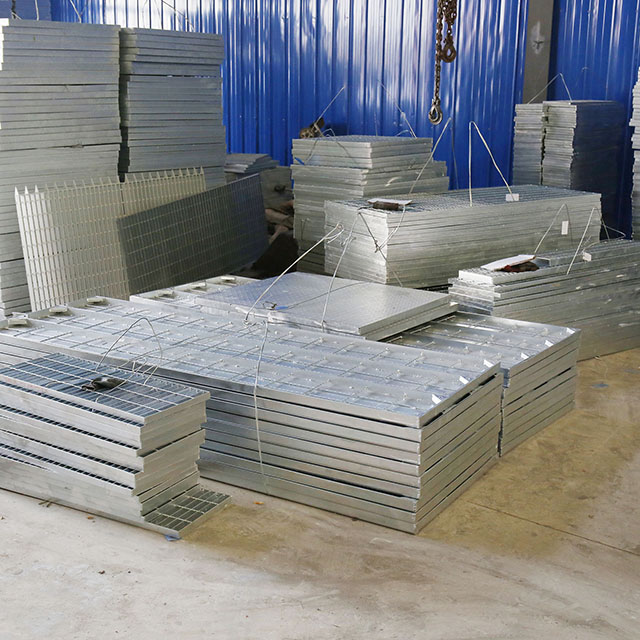
Steel grating is used in a wide range of industrial applications, from walkways and platforms to drainage covers and stair treads. Its versatility and strength make it an ideal choice for various industries, including manufacturing, construction, and transportation.
Industrial walkways and platforms require grating that can support heavy loads and provide a safe walking surface. Welded steel grating is commonly used in these applications due to its strength and durability. It offers a reliable solution for ensuring safety and stability in industrial environments.
Steel grating is also used in drainage systems to provide a sturdy cover that allows water to flow through while preventing debris from entering the system. Galvanized steel grating is often used for drainage covers due to its corrosion resistance and cost-effectiveness.
Stair treads made from steel grating offer a slip-resistant surface, making them ideal for industrial and commercial settings. Press-locked grating is often used for stair treads due to its smooth surface and aesthetic appeal. It provides a safe and attractive solution for staircases in various environments.
In conclusion, the selection of steel grating for industrial use involves considering various factors such as load requirements, environmental conditions, and aesthetic preferences. By understanding the different types of steel grating and their applications, industry professionals can make informed decisions to optimize their infrastructure. Whether it's for heavy-duty industrial platforms or aesthetically pleasing architectural projects, the right steel grating can enhance both functionality and appearance.
1. What are the main types of steel grating?
The main types of steel grating include welded steel grating, press-locked grating, and swage-locked grating, each with unique characteristics for different applications.
2. How do I choose the right steel grating for my project?
Consider factors such as load requirements, environmental conditions, and aesthetic preferences to select the most suitable steel grating for your project.
3. What is the advantage of using welded steel grating?
Welded steel grating offers high strength and durability, making it ideal for heavy-duty applications like industrial walkways and platforms.
4. Why is press-locked grating preferred for architectural projects?
Press-locked grating provides a smooth surface and aesthetic appeal, making it suitable for projects where appearance is important.
5. Can steel grating be used in corrosive environments?
Yes, stainless steel grating is recommended for corrosive environments due to its excellent corrosion resistance.
6. What applications are suitable for swage-locked grating?
Swage-locked grating is suitable for applications requiring both durability and a refined appearance, such as commercial and industrial settings.
7. How does galvanized steel grating benefit drainage systems?
Galvanized steel grating provides a sturdy and corrosion-resistant cover for drainage systems, allowing water flow while preventing debris entry.


