loading


| Availability: | |
|---|---|
| Quantity: | |
>> Product Introduction
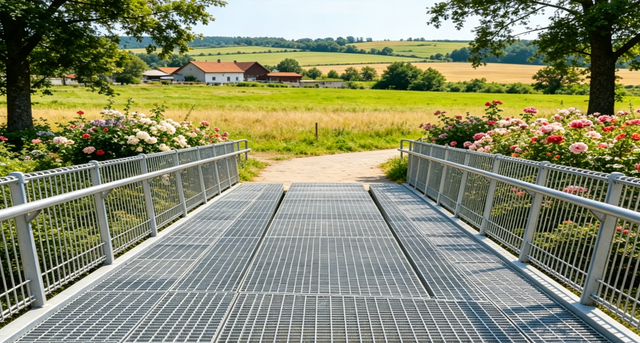
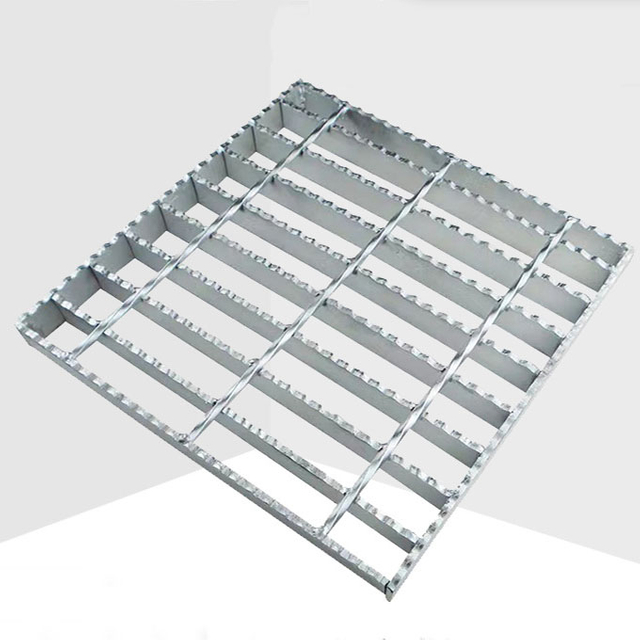
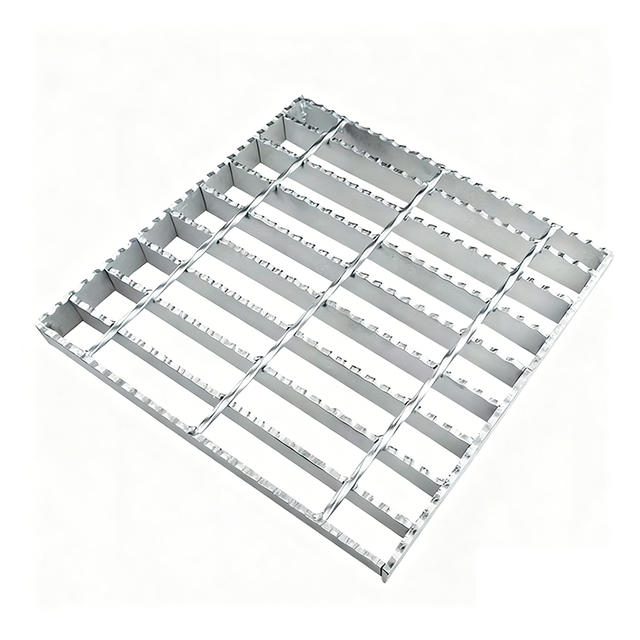
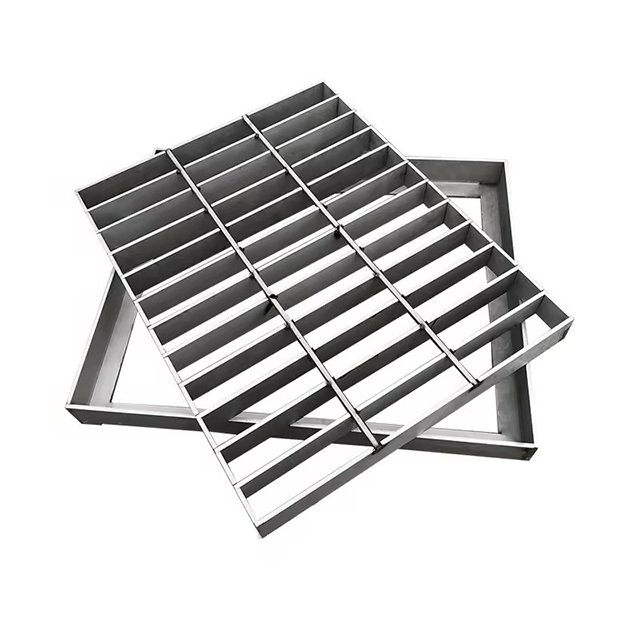
Compound steel grating is a high‑performance industrial flooring solution that combines a load‑bearing steel grating frame with a sealed patterned steel plate surface. It delivers full support for small items, tools, and heavy equipment while retaining efficient drainage, ventilation, and slip resistance—ideal for harsh industrial environments.
Hot‑dip galvanized (80–100μm zinc) for 20+ years outdoor service
304/316 stainless steel for marine, offshore, and chemical environments
Passes 3000‑hour salt spray tests
Temperature range: −50°C to +500°C
Static‑dissipative ESD versions (10⁴–10¹¹Ω) for explosive areas
Class A non‑combustible fire rating
Key Features:
Dual-function surface: Solid plate for small-item support + open edges for debris/fluid drainage.
Ultra-durable: Hot-dip galvanized or stainless steel options resist corrosion in chemical/oil industries.
Safety-focused: Anti-slip serrated plate surface meets OSHA standards.
Typical Applications: Oil refineries, power plant walkways, offshore platforms, and mining facilities where both full-surface support and partial drainage are required.
Keywords: heavy-duty compound grating, steel plate grating, industrial drainage flooring.
>> Technical Parameters
| Parameter | Specification Range | Industry Standard |
| Material Options | • Carbon Steel (Q235B) | ASTM A36 / A240 |
| • Stainless Steel (304/316) | ||
| • Aluminum Alloy | ||
| Load Capacity | 5-12 tons/m² (customizable) | EN 1991-1-1 |
| Panel Dimensions | Standard: 1m×3m | ISO 9001 |
| Max: 1.5m×6m | ||
| Bearing Bar Thickness | 5-12mm (±0.2mm tolerance) | DIN 24537 |
| Surface Treatment | • Hot-dip galvanized (80-100μm) | ISO 1461 / ASTM A123 |
| • Epoxy coating (300-500μm) | ||
| • Stainless steel passivation | ||
| Drainage Open Area | 30-70% (adjustable pattern) | EN 1433 |
| Anti-Slip Performance | • Serrated depth: 3-5mm | OSHA 1910.23 |
| • Friction coefficient: ≥0.78 | ||
| Temperature Range | -50°C to +500°C (special alloys available) | ASME B31.3 |
| Fire Rating | Class A (non-combustible) | ASTM E84 |
| Electrical Conductivity | Custom ESD versions (10⁴-10¹¹Ω) | IEC 61340-5-1 |
Key Technical Notes:
All tolerances meet ISO 2768-mK standard
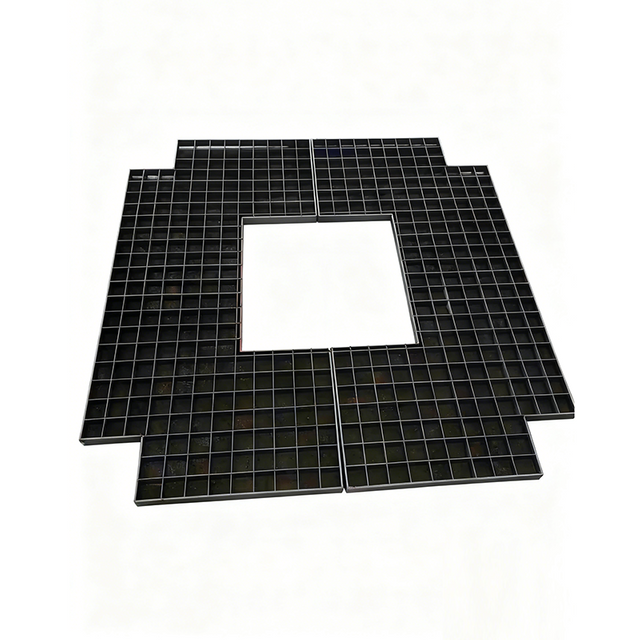
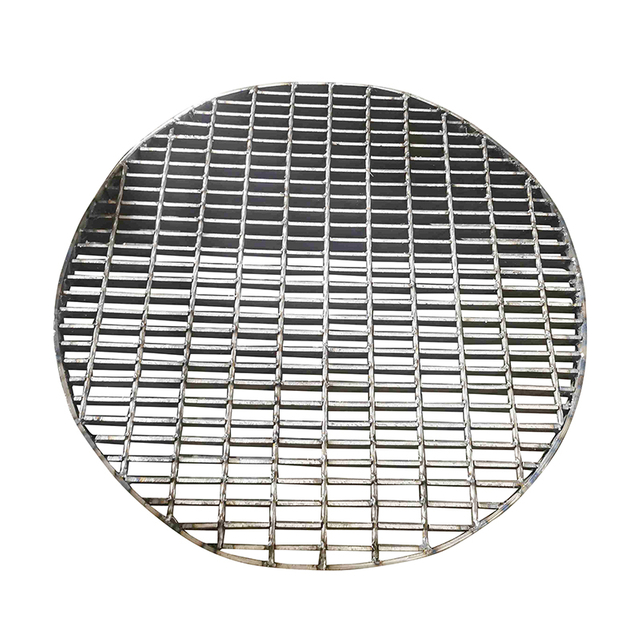
Custom machining available for special shapes (circular/arched)
Third-party inspection reports (SGS/BV) provided upon request
Keywords for SEO:
"heavy duty compound grating specifications"
"industrial steel grating load capacity table"
"anti-slip metal flooring technical data"
"corrosion resistant grating thickness standards"
"custom compound grating dimensions"
This table:
Organizes critical mechanical parameters vertically for easy scanning
Includes both standard and maximum ranges
References international standards for credibility
Highlights customization capabilities
Uses industry-specific terminology preferred by engineers
>> Product Uses
1. Oil & Gas Refineries
Designed for heavy equipment zones and spill containment areas, our compound grating provides full-surface support for workers/tools while allowing side drainage of oil/chemicals. The non-sparking stainless steel option is ideal for explosive environments.
Keywords: oil rig flooring, refinery walkway grating, hazardous area metal flooring
2. Power Generation Plants
Used in turbine platforms and boiler access areas, the hybrid design withstands high temperatures (500°C) and heavy loads (10+ tons/m²). The closed center prevents small part drops into critical machinery.
Keywords: power plant catwalks, turbine platform grating, high-temperature metal flooring
3. Chemical Processing Facilities
The seamless steel plate surface resists acid/alkali corrosion, while perimeter drainage handles chemical spills. Optional epoxy-coated or 316 stainless steel versions available.
Keywords: chemical plant walkways, acid-resistant grating, industrial spill containment flooring
4. Mining & Heavy Industry
Ideal for mineral processing plants and conveyor walkways, combining abrasion-resistant surfaces with debris-draining edges. Galvanized versions withstand outdoor weathering for 20+ years.
Keywords: mining platform grating, quarry walkways, heavy industrial metal flooring
5. Marine & Offshore Platforms
Saltwater-resistant galvanized or stainless steel options prevent corrosion in splash zones. The slip-resistant serrated surface ensures safety on wet decks.
Keywords: offshore platform grating, shipyard walkways, marine-grade metal flooring
6. Food & Pharmaceutical Plants
304/316 stainless steel versions meet hygienic design requirements. The fully sealed center prevents bacterial growth, while drainage edges comply with FDA/USDA standards.
Keywords: sanitary metal flooring, food-grade grating, pharmaceutical walkway systems
>> Product Operate Guide
1. Surface Preparation
Ensure the supporting framework is level and structurally sound. Clean the surface from debris before installation.
2. Proper Alignment
Align grating panels precisely, maintaining consistent spacing. Use clamps or bolts for secure fastening—weld only if specified.
3. Load Distribution
Position heavy loads over bearing bars, not unsupported gaps. Avoid point loads exceeding rated capacity.
4. Drainage Maintenance
Keep perimeter drainage channels clear of obstructions for optimal fluid flow.
5. Safety Checks
Regularly inspect for corrosion, loose fittings, or surface wear—recoat or replace damaged sections promptly.
Keywords: compound grating installation, metal flooring maintenance, industrial walkway safety tips
>> Product Video
>> FAQ
1. What makes compound grating different from standard steel grating?
Compound grating combines a solid steel plate center with perimeter drainage openings, offering full surface support + partial drainage – ideal for areas needing both small-item stability and liquid runoff.
2. What’s the maximum load capacity?
Standard models handle 5-12 tons/m², customizable for heavier needs. Load distribution must align with bearing bars for optimal performance.
3. How do I choose between galvanized and stainless steel?
Hot-dip galvanized (80μm) suits most industrial environments, while 304/316 stainless steel is mandatory for corrosive (chemical/marine) or hygienic (food/pharma) applications.
4. Is the serrated surface slippery when wet?
No. Our 3-5mm deep serrations achieve a 0.78+ friction coefficient, exceeding OSHA standards even in oily/wet conditions.
5. Can you customize shapes for curved platforms?
Yes. We laser-cut circular/arched panels (±2mm precision) and provide CAD drawings for approval before production.
Keywords: compound grating vs standard, steel grating load capacity, anti-slip metal flooring