
Views: 0 Author: Site Editor Publish Time: 2026-08-12 Origin: Site


Chemical processing environments aggressively destroy traditional metal infrastructure. Constant exposure to industrial acids, concentrated alkalis, and persistent moisture eats away at carbon steel and aluminum structures. This rapid degradation creates severe slip-and-fall hazards and compromises load-bearing walkways. Facility managers face a continuous battle against structural liabilities and facility downtime. Relying on galvanized coatings or standard steel alloys introduces hidden risks. Minor surface scratches quickly lead to deep structural oxidation.
You need a structural alternative engineered to withstand aggressive chemical exposure while prioritizing worker safety. Transitioning to FRP grating for chemical plants provides a permanent solution to these environmental challenges. This composite material replaces failing metal grids with a high-strength, corrosion-resistant matrix. Upgrading your walking-working surfaces directly addresses OSHA compliance requirements and mitigates workplace hazards. Implementing this specialized grating transforms dangerous, high-maintenance zones into secure, reliable operational platforms.
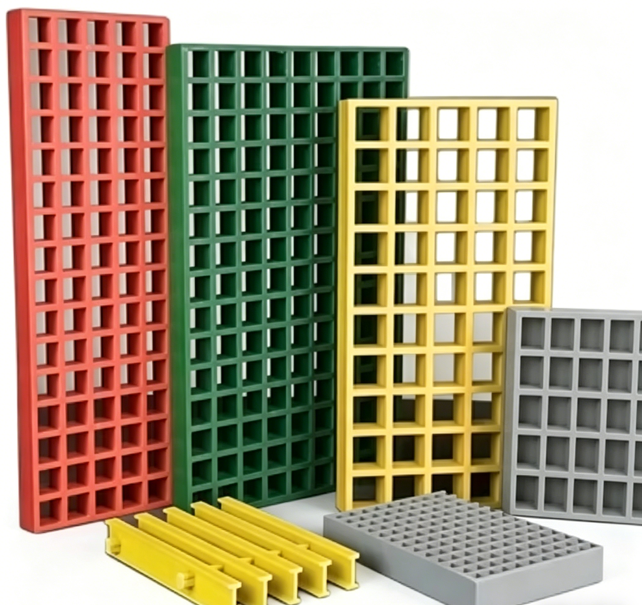
Corrosion Immunity: FRP grating eliminates the galvanic and chemical corrosion risks inherent to metallic alternatives, maintaining structural integrity in aggressive chemical environments.
Engineered Traction: Integrated grit surfaces provide superior slip resistance that does not degrade easily, even in wet, oil-prone, or chemical-spill conditions.
Application-Specific Customization: Achieving maximum safety requires matching the specific FRP resin system (e.g., Vinyl Ester vs. Isophthalic Polyester) to the facility's exact chemical exposure profile.
Holistic Safety Ecosystems: Maximizing plant safety involves integrating FRP grating with complementary composite structures, such as FRP handrails and stair treads, to eliminate corrosion across all walking-working surfaces.
Table of Contents
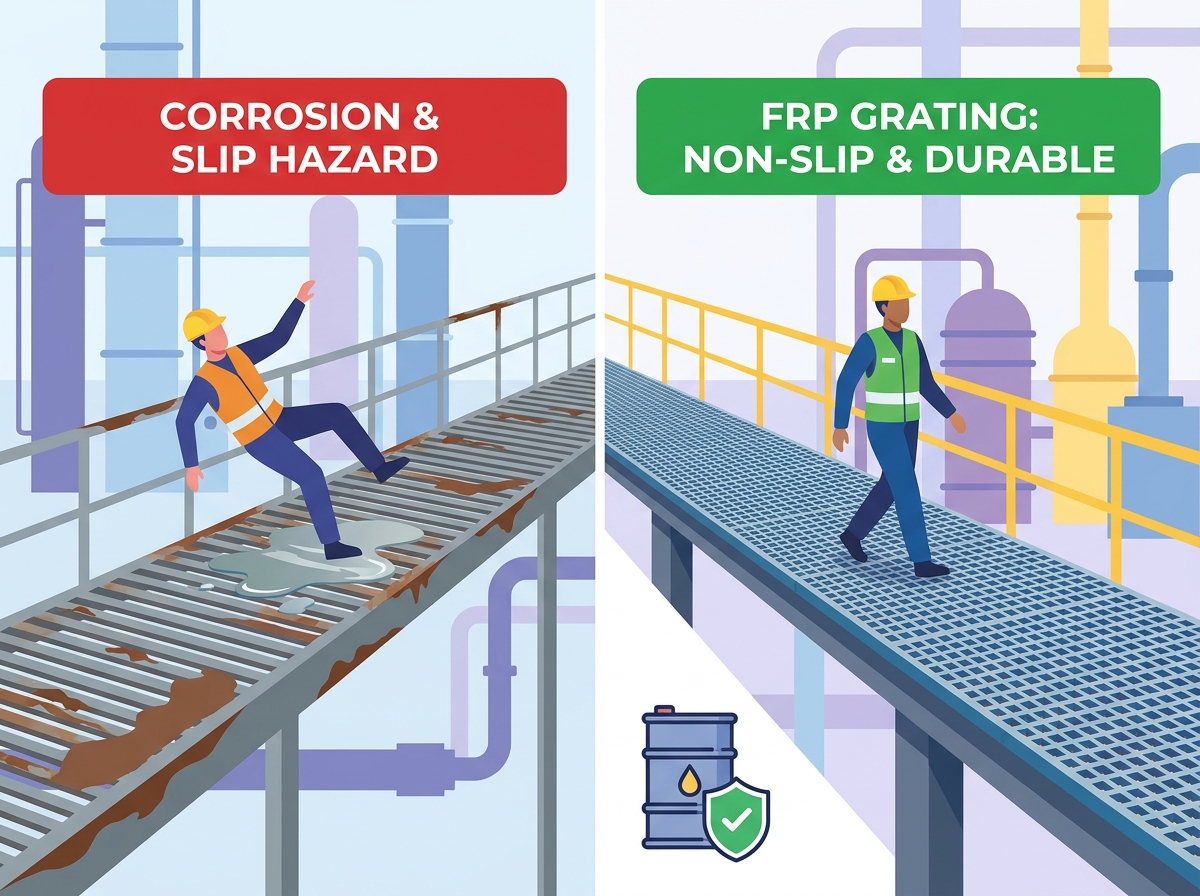
Traditional metallic grating fundamentally fails in harsh industrial processing environments. When carbon steel encounters hydrochloric acid, sulfuric acid, or standard industrial moisture, rapid oxidation begins. Galvanic and chemical corrosion strip away the material layer by layer. Facility engineers often specify galvanized steel to delay this process. Galvanized zinc coatings offer only temporary surface protection. Once a dropped wrench or heavy foot traffic scratches the zinc layer, the underlying steel rusts immediately. Localized corrosion spreads rapidly beneath the coating, compromising the entire panel.
Compromised metal walkways introduce severe safety liabilities across the plant floor. As steel oxidizes, it loses structural mass and load-bearing capacity. A grating panel designed to support heavy operator traffic suddenly becomes a catastrophic fall hazard. Corrosion creates jagged, rusted edges that pose significant laceration risks to maintenance personnel. Traditional serrated steel loses its traction profile as the metal wears down and rusts. This degradation leads to dangerous slip-and-fall incidents, directly increasing OSHA recordable injuries and exposing the facility to compliance violations.
The maintenance burden associated with failing metal infrastructure paralyzes operational efficiency. Maintenance teams spend endless hours inspecting, treating, and replacing corroded steel grids. Sandblasting and repainting metal grating inside an active chemical processing area requires extensive preparation and hazardous material handling. This continuous cycle of degradation and repair forces frequent facility downtime. Relying on materials that inherently react with their environment guarantees a permanent state of structural vulnerability and reactive maintenance.
We see specific failure points repeatedly in chemical facilities relying on metal grating:
Fastener Failure: Carbon steel clips and bolts rust first, causing grating panels to shift and create immediate trip hazards.
Underside Oxidation: Chemical vapors rise and attack the bottom of elevated catwalks, hiding severe structural degradation from routine top-down visual inspections.
Weld Seam Deterioration: The heat-affected zones around welded steel joints corrode faster than the surrounding metal, leading to sudden cross-bar detachment.
Traction Loss: Serrated steel edges wear smooth under heavy foot traffic, turning wet walkways into ice-like surfaces.
Fiberglass Reinforced Plastic achieves superior chemical resistance through a highly engineered composite matrix. Manufacturers combine high-strength continuous fiberglass rovings with premium thermosetting resins. The fiberglass provides necessary tensile strength and structural rigidity. The resin encapsulates the glass fibers, creating an impervious barrier against aggressive industrial substances. This composite structure does not rely on vulnerable surface coatings. Chemical resistance exists throughout the entire thickness of the material. It withstands continuous exposure to harsh caustics, volatile solvents, and corrosive oils without losing structural integrity.
Slip resistance remains a primary safety mechanism in spill-prone processing areas. FRP grating utilizes aggressive aluminum oxide grit to maximize surface traction. Manufacturers apply this grit using specific methods to ensure longevity. Meniscus grating features a naturally concave surface formed during the curing process, providing basic slip resistance. Integrally applied grit involves embedding aluminum oxide directly into the top layer of liquid resin before it cures. This integral bond ensures the grit does not peel or flake off under heavy foot traffic or chemical washing. It maintains a significantly higher coefficient of friction compared to diamond plate or serrated steel.
Electrical safety and fire resistance add necessary layers of protection in hazardous environments. FRP materials are inherently non-conductive. They do not transmit electrical currents, protecting workers from accidental shocks near high-voltage equipment. FRP is completely non-sparking. Dropping a heavy steel tool onto an FRP walkway will not generate a spark. This characteristic proves mandatory in areas processing combustible gases or volatile solvents. Manufacturers incorporate specialized flame-retardant additives into the resin matrix. These additives ensure the grating meets stringent ASTM E84 Class 1 flame spread ratings, preventing the material from accelerating a facility fire.
Transitioning to composite walking surfaces delivers measurable operational safety improvements. Facilities replacing degraded steel with FRP report immediate reductions in slip-and-fall incidents. The reliable traction profile prevents accidents even when walkways become coated in industrial lubricants or chemical spills. Maintenance-related downtime decreases significantly because teams no longer barricade areas for grating replacement or repainting. Stabilization of the physical infrastructure allows operators to focus entirely on chemical production rather than navigating hazardous floor conditions.
Trench covers and secondary containment bunds represent the most corrosive zones in any facility. These areas actively collect chemical spills, wash-down runoff, and highly concentrated process fluids. Metal covers placed over these trenches corrode exceptionally fast due to concentrated chemical vapors and frequent liquid contact. FRP trench covers provide a lightweight, structurally sound alternative. They resist pooled chemicals perfectly. Maintenance personnel easily lift these lightweight composite covers to inspect trenches or clean containment bunds without requiring heavy lifting equipment.
Elevated catwalks and multi-level mezzanines require absolute structural reliability. A localized grating failure on an elevated platform results in a catastrophic fall. Chemical vapors naturally rise, attacking the underside of steel catwalks where corrosion goes unnoticed until a failure occurs. FRP grating eliminates this hidden danger. It maintains full load-bearing capacity regardless of vapor exposure. Consistent structural integrity of composite materials ensures multi-level processing areas remain safe for operators monitoring elevated vats, mixing tanks, and distillation columns.
Wash-down areas and loading docks face continuous moisture exposure combined with heavy industrial traffic. Facilities frequently sanitize these zones using high-pressure water and aggressive cleaning chemicals. This combination destroys traditional metal flooring rapidly. FRP grating handles continuous wet conditions effortlessly. The open mesh design allows water and chemical runoff to drain instantly, preventing dangerous pooling on the walking surface. The integral grit surface grips operator footwear securely, ensuring safe material transfer and equipment cleaning operations in completely saturated environments.
Pump stations and chemical dosing areas also demand specialized flooring. Vibrations from heavy pumps loosen traditional metal grating fasteners over time. The inherent flexibility of FRP absorbs these micro-vibrations, keeping the walking surface secure. When dosing lines leak, the concentrated chemicals drop directly onto the grating below. Using FRP grating for chemical plants in these specific drop zones prevents the floor from dissolving beneath the operators' feet.
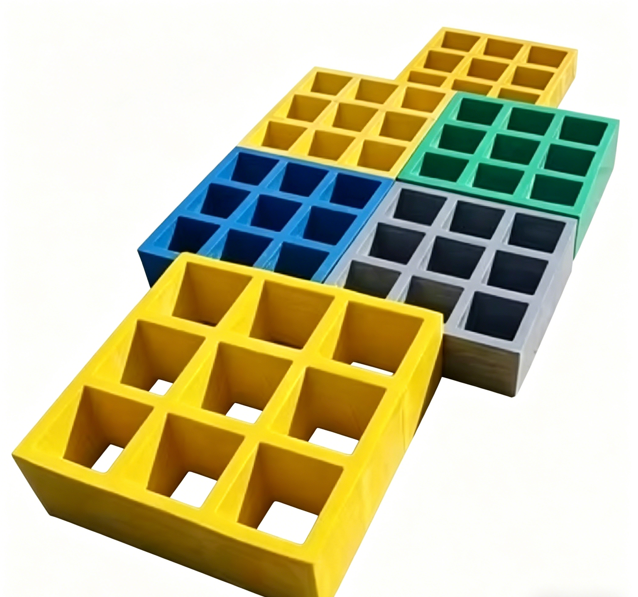
Selecting the correct structural architecture determines the success of your installation. Facilities choose between molded and pultruded manufacturing processes based on specific physical requirements. Molded grating features a one-piece construction with interwoven fiberglass rovings. This creates bi-directional strength, meaning the panel bears loads evenly across both its length and width. Pultruded grating utilizes continuous glass strands pulled through a resin bath and heated die. This process creates distinct load-bearing bars, offering exceptional unidirectional strength ideal for spanning long distances.
Feature | Molded FRP Grating | Pultruded FRP Grating |
|---|---|---|
Manufacturing Process | Liquid resin poured over interwoven glass fibers in a mold. | Continuous glass fibers pulled through a resin bath and heated die. |
Strength Direction | Bi-directional (equal strength in both directions). | Unidirectional (strength along the bearing bars). |
Glass-to-Resin Ratio | 35% Glass / 65% Resin (Maximum chemical resistance). | 70% Glass / 30% Resin (Maximum structural strength). |
Best Application | Complex layouts requiring extensive pipe penetrations and cutting. | Long spans requiring high load capacity and minimal deflection. |
Cut Flexibility | Excellent. Does not require edge banding after cutting. | Limited. Cutting across bearing bars requires additional support. |
Resin selection dictates the chemical resistance profile of the entire installation. Specifying the wrong resin guarantees premature failure. Vinyl ester represents the premium choice for extreme chemical environments. It withstands direct exposure to harsh caustics, sulfuric acid, and strong oxidizing agents. Isophthalic polyester serves as the industrial standard for moderate environments. It handles intermittent chemical splashing, fumes, and general industrial runoff effectively. Orthophthalic polyester provides standard corrosion resistance suitable for basic water, wastewater, and light industrial applications where harsh chemicals are absent.
Maximizing facility safety requires expanding beyond simple floor grating to create a holistic safety ecosystem. Upgrading a walkway to FRP while leaving corroded steel handrails in place introduces a critical weak point. A compromised steel guardrail cannot arrest a worker's fall. Facilities integrate composite grating with matching FRP handrails, guardrails, and stair treads. This unified approach eliminates galvanic corrosion across all walking-working surfaces. It ensures every structural component an operator interacts with provides the same level of chemical resistance and structural reliability.
Structural integrity depends on strict adherence to load capacity and deflection limits. Engineers measure grating performance by calculating how much the material bends under specific weights. A standard safety metric requires that grating deflects no more than one-quarter of an inch under a uniform load of 100 pounds per square foot. FRP grating meets and exceeds these structural demands when specified correctly. Pultruded grating, with its high glass content, rivals the load capacities of heavy-duty steel. It supports substantial concentrated loads without permanent deformation, ensuring a rigid, secure platform for operators and equipment.
Ergonomics play a vital role in reducing worker fatigue and improving daily operational safety. Solid steel grating is completely rigid. Standing or walking on unyielding steel for an entire eight-hour shift causes severe lower back, knee, and foot fatigue. FRP grating possesses a slight, engineered modulus of elasticity. This microscopic give cushions the impact on operator joints. While the deflection is imperceptible to the eye, the ergonomic benefits are substantial. Workers experience significantly less physical strain, which directly improves focus, reduces fatigue-related errors, and enhances overall workplace productivity.
Regulatory compliance drives the specification of industrial walking surfaces. OSHA standard 1910.22 mandates that all walking-working surfaces must be kept in a clean, orderly, and sanitary condition, free from hazards like sharp edges and slippery conditions. Corroded steel inherently violates these standards. Specifying the correct FRP grating ensures immediate and long-term compliance. The integral grit surface satisfies OSHA requirements for slip resistance. Specific molded mesh patterns, such as mini-mesh or micro-mesh, comply with ADA requirements by preventing high heels or small tools from passing through the grating openings.
The physical characteristics of composite materials dramatically streamline the installation process. Traditional steel grating is exceptionally heavy, requiring cranes, forklifts, and heavy rigging equipment to maneuver panels into place. Heavy machinery often cannot access tight chemical processing zones. FRP weighs roughly one-quarter of its steel counterpart. Two workers easily lift, carry, and position standard composite panels manually. This lightweight nature eliminates the need for heavy lifting equipment, accelerating the installation timeline and reducing logistical disruptions on the plant floor.
Fabrication flexibility allows for rapid on-site modifications without hazardous procedures. Modifying steel grating requires oxy-acetylene torches, grinders, and welding equipment. This necessitates hot work permits, fire watches, and often the complete shutdown of adjacent chemical processes due to ignition risks. Installers cut FRP grating using standard circular saws or jigsaws equipped with diamond-encrusted masonry blades. This cold-cutting process generates no sparks. Teams easily fabricate panels on-site to fit around complex pipe routing, structural columns, and existing chemical vats without interrupting facility operations.
Design adaptability ensures a precise fit in highly congested industrial environments. Chemical plants feature labyrinthine layouts of piping, conduits, and support structures. Molded FRP grating provides exceptional bi-directional strength, meaning installers cut complex geometric shapes out of a panel without destroying its structural integrity. The remaining mesh continues to distribute loads evenly. Installers simply seal the cut edges with a compatible resin to prevent chemical ingress into the exposed fiberglass strands. This adaptability ensures a seamless, trip-free walking surface regardless of underlying structural complexities.
We follow a strict protocol for on-site FRP fabrication to ensure maximum safety and structural integrity:
Measure and mark all pipe penetrations using a high-visibility industrial marker directly on the panel surface.
Support the panel evenly on heavy-duty sawhorses to prevent binding the saw blade during complex cuts.
Utilize a diamond-grit blade to slice cleanly through the glass fibers without fraying or splintering the edges.
Apply a generous coat of matching resin to all cut edges using a standard foam brush, allowing it to cure completely before installation.
Specifying the incorrect support span represents the most critical implementation risk. Placing a thin grating panel over a wide support span causes dangerous deflection and eventual structural failure. You must never guess span limits. Always consult the manufacturer load and deflection tables. Match the grating thickness, resin type, and architecture to the exact distance between your structural supports. If a span exceeds the capacity of a standard molded panel, upgrade to a thicker profile or switch to a high-strength pultruded alternative to guarantee operator safety.
Fastening systems dictate the ultimate security of the grating installation. Premium composite grating fails if secured with easily corroded hardware. Using standard carbon steel clips in a chemical plant guarantees rapid corrosion. As clips rust and break, grating panels shift underfoot, creating immediate trip hazards and compromising the continuous walking surface. Specify Type 316 Stainless Steel fastening hardware. Utilize M-clips to secure panels to structural supports, and use C-clips to join adjacent panels together mid-span. This prevents differential deflection and ensures a unified, secure platform.
Prolonged ultraviolet exposure degrades unprotected composite materials in outdoor installations. Intense sunlight breaks down the surface resin over time, exposing the underlying fiberglass strands. This phenomenon, known as fiber bloom, creates a rough, abrasive surface and slowly compromises the material's structural integrity. Mitigate this risk for any grating installed outside the main facility. Specify FRP manufactured with premium UV inhibitors mixed directly into the resin matrix. Require a factory-applied polyurethane topcoat. This dual-layer protection shields the composite from solar radiation, preventing fiber bloom and extending the installation lifespan.
Replacing degrading metal infrastructure with engineered composite materials fundamentally stabilizes your facility operational safety. Traditional steel and aluminum cannot survive the continuous onslaught of industrial acids, caustics, and moisture. FRP grating eliminates galvanic corrosion, provides permanent slip resistance, and maintains structural load-bearing capacity in the harshest environments. This transition removes hidden structural liabilities, ensures continuous OSHA compliance, and protects your personnel from catastrophic falls and laceration hazards.
Successful implementation requires precise material specification. You cannot treat composite grating as a generic commodity. Accurately match the resin formulation to your specific chemical exposure profile. Vinyl ester remains mandatory for extreme caustics, while isophthalic polyester suits moderate environments. Select the correct architecture—molded for complex layouts and pultruded for long spans—to ensure the grating performs flawlessly under your facility load requirements.
For industrial projects requiring dependable grating and structural access solutions, Foshan Tianhe Steel Grating Co., Ltd. specializes in the research, development, and manufacturing of grating, trench covers, ladders, handrails, fencing, and related products. Supported by grating design expertise, CAD capabilities, production equipment, and quality management systems, the company provides manufacturing and customization support for a wide range of industrial applications.
Schedule a comprehensive facility safety audit to identify and map all degrading metal walkways and elevated platforms.
Request a detailed chemical resistance guide from manufacturers to match specific resin types to your exact chemical exposure profile.
Obtain physical material samples to evaluate the integral grit traction in your specific wet, oily, or spill-prone conditions.
Consult with a structural engineer to perform accurate load-span calculations for all elevated catwalks and mezzanines prior to specification.
A: When correctly matched to the chemical environment, FRP grating lasts decades. Premium vinyl ester resins withstand harsh acids and caustics indefinitely without degrading. This lifespan significantly exceeds traditional galvanized steel, which requires frequent replacement in aggressive industrial conditions. Proper specification ensures the material maintains its structural integrity long after metal alternatives fail.
A: Yes, composite grating handles extreme temperatures effectively. Quality thermosetting resins maintain structural integrity from sub-zero conditions up to 150°F for standard polyesters, and up to 200°F for premium vinyl esters. Always consult manufacturer specifications for continuous high-temperature exposure limits to ensure the resin matrix remains stable.
A: Vinyl ester resin is the mandatory choice for sulfuric acid exposure. It provides superior resistance to harsh acids, strong caustics, and aggressive oxidizing agents. You must always consult a specific chemical resistance chart to verify the resin performance based on the exact concentration and temperature of the acid.
A: Standard molded pedestrian grating cannot support forklifts. Heavy-duty pultruded FRP grating is specifically engineered for vehicular loads. It features a high glass-to-resin ratio and thick bearing bars designed to handle the concentrated weight and rolling loads of heavy machinery and industrial forklifts safely.
A: Installers cut FRP using standard circular saws or jigsaws equipped with diamond-encrusted masonry blades. This cold-cutting process generates no sparks. Workers must wear appropriate PPE, including dust masks, safety goggles, and gloves, to protect against fine fiberglass dust generated during the cutting process.
A: Integrally molded grit maintains its slip resistance exceptionally well. Because manufacturers embed the aluminum oxide grit directly into the resin matrix during curing, it does not peel or flake off. It withstands heavy foot traffic and chemical wash-downs far better than painted-on grit or serrated steel.
A: Yes, you easily retrofit FRP grating onto existing carbon steel, stainless steel, or concrete support structures. You must use appropriate Type 316 stainless steel fastening hardware, such as M-clips, to secure the composite panels to the existing beams and prevent hardware corrosion from undermining the installation.


