
Views: 0 Author: Site Editor Publish Time: 2026-09-17 Origin: Site


Selecting the wrong industrial grating carries hidden operational risks that go far beyond the initial specification. Premature corrosion, structural fatigue, and non-compliance trigger catastrophic facility downtime and create severe safety hazards. At its core, grating consists of metallic bars arranged in a grid to create a strong, open surface. However, the precision of its manufacturing execution dictates its ultimate performance in the field. Buyers face a complex challenge. You must match specific environmental demands—such as chemical exposure, heavy dynamic loads, and strict sanitation requirements—with the correct metallurgical and structural specifications. Understanding the nuances of stainless steel grating manufacturing, from initial alloy selection to final surface passivation, is mandatory. This knowledge allows you to specify a product that delivers long-term reliability and minimizes ongoing maintenance requirements.
Alloy dictates baseline survival: The choice between 304/304L and 316/316L fundamentally determines the grating's resistance to localized corrosion and chloride exposure.
Construction method defines structural integrity: Welded, press-locked, and swaged manufacturing processes offer distinct trade-offs between extreme load-bearing capacity and architectural precision.
Post-manufacturing finishes are non-negotiable: Untreated stainless steel grating is vulnerable; chemical passivation or electropolishing is required to restore the protective chromium oxide layer after fabrication to prevent rust and surface stains.
Compliance drives specification: Procurement must align with NAAMM (National Association of Architectural Metal Manufacturers) standards, ADA requirements, and facility-specific load tables.
Table of Contents
Grade 304 serves as the baseline austenitic stainless steel for industrial grating. Its chemical composition includes approximately 18% chromium and 8% nickel. This mixture provides excellent oxidation resistance and durability for standard facility applications. However, standard 304 contains up to 0.08% carbon. During the intense heat cycles of the welding process, this carbon combines with chromium to form chromium carbides at the grain boundaries. This metallurgical phenomenon, known as sensitization or carbide precipitation, depletes the surrounding areas of chromium. Consequently, the weld zones become highly susceptible to intergranular corrosion in the field.
Manufacturers mitigate this risk by utilizing the "L" variant (304L). Grade 304L restricts the maximum carbon content to 0.03%. This slight adjustment prevents carbide precipitation during fabrication, ensuring the weld joints remain as corrosion-resistant as the base metal. Grade 304 and 304L perform optimally in general industrial facilities, municipal wastewater treatment plants, and architectural projects where exposure to harsh chlorides or caustic chemicals remains minimal.
When environmental conditions escalate, Grade 316 becomes the mandatory specification. The defining characteristic of 316 stainless steel is the addition of 2% to 3% molybdenum. This specific alloying element dramatically enhances the metal's resistance to localized attacks, specifically pitting and crevice corrosion caused by chloride ions. Similar to its counterpart, the 316L variant utilizes a low-carbon chemistry to protect weld integrity during manufacturing.
Grade 316L is engineered for severe environments. Optimal use cases include offshore marine platforms, chemical processing plants, and food production facilities that utilize harsh, high-temperature wash-down chemicals. In highly corrosive environments, 316L prevents rapid structural degradation, eliminating the need for premature facility shutdowns and frequent grating replacement cycles. The inclusion of molybdenum ensures the passive oxide layer remains intact even when subjected to continuous salt spray or acidic runoff.
Specifying the correct alloy requires a rigid technical evaluation of the installation environment. Over-specifying 316L for a dry, climate-controlled warehouse misallocates material resources. Conversely, under-specifying 304L for a coastal desalination plant guarantees rapid structural failure. Facility engineers must evaluate the specific ambient humidity, chemical exposure profile, and cleaning protocols of the site.
Alloy selection extends beyond the grating panels. A major risk in structural design is galvanic corrosion. This occurs when dissimilar metals are placed in electrical contact within a corrosive electrolyte, such as saltwater or chemical mist. If Stainless Steel Grating is improperly paired with standard carbon steel structural supports without proper isolation, the carbon steel acts as an anode. It will corrode at an accelerated rate, eventually compromising the entire platform.
To prevent galvanic corrosion in the field, contractors must implement strict isolation protocols:
Install dielectric neoprene pads between the stainless steel grating and the carbon steel support beams.
Utilize Teflon separators or specialized isolation tape along all bearing surfaces.
Specify stainless steel saddle clips and mounting hardware to ensure the fasteners do not introduce a dissimilar metal into the connection point.
Apply heavy-duty isolation coatings to the top flange of the carbon steel supports prior to grating installation.
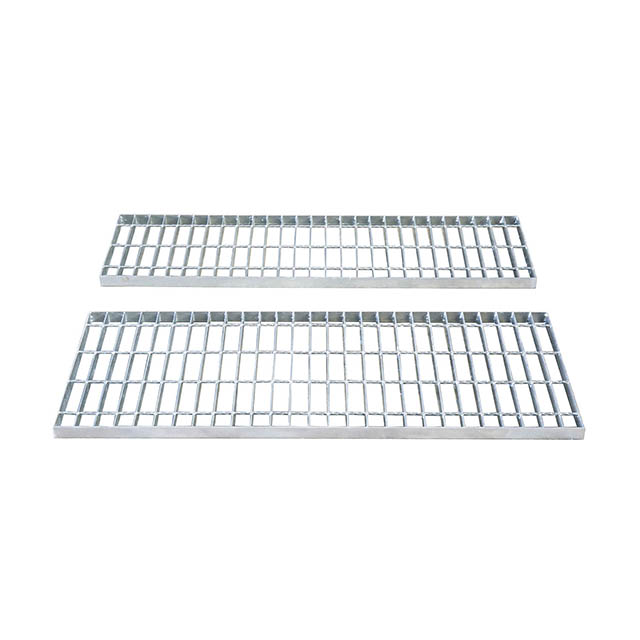
The automated forge-welding process remains the standard for heavy-duty industrial grating. In this method, specialized welding machines apply extreme electrical current and mechanical pressure simultaneously. The cross bars are physically forged into the bearing bars, creating a permanent, single-piece fused intersection without the need for filler metal. This heat-fusion process yields exceptional rigidity and lateral stability.
The primary structural advantage of welded grating is its ability to withstand heavy dynamic loads and continuous industrial traffic, including forklifts and heavy transport vehicles. The fused joints prevent the panels from racking or loosening under constant vibration. The manufacturing reality of forge-welding involves massive heat input. This generates heat tint and weld spatter across the panel, necessitating rigorous post-fabrication mechanical cleaning and chemical treatment to restore the metal's passive state.
Press-locked manufacturing entirely avoids the heat of welding, relying instead on extreme mechanical force. The process begins by punching precise dovetail slots into both the deep bearing bars and the shallower cross bars. High-tonnage hydraulic presses then force the cross bars into the bearing bar slots, mechanically interlocking the grid. The resulting intersections are flush, tight, and exceptionally clean.
The advantages of press-locked grating are primarily aesthetic and dimensional. Because no heat is introduced, there is no warping, heat discoloration, or weld spatter. This makes it the superior choice for high-end architectural applications, pedestrian walkways, and close-mesh configurations where visual uniformity is required. Buyers must evaluate load limitations carefully. While press-locked grating handles heavy uniform pedestrian loads effortlessly, it lacks the absolute rigidity of forge-welded panels when subjected to heavy, twisting vehicular loads.
Swaged grating utilizes a distinct mechanical process where hollow, tubular cross bars are inserted through pre-punched holes in the bearing bars. A specialized swaging tool then expands the inside of the tube, permanently locking it against the bearing bar walls. This method provides excellent lateral stability without welding and is frequently used for pedestrian applications requiring close bar spacing.
Riveted grating represents the oldest and most impact-resistant manufacturing method. It involves cold-pressing rivets to join straight bearing bars with crimped, reticuline cross bars. The truss-like geometry of riveted grating provides superior load distribution and exceptional resistance to buckling under heavy impact. It offers maximum walking comfort and slip resistance, making it ideal for bridge decking and heavy-duty industrial platforms.

Selecting the correct manufacturing method requires correlating fabrication capabilities with anticipated traffic types. The structural implications of bi-directional load distribution vary significantly based on how the intersections are joined.
Manufacturing Method | Optimal Traffic Type | Structural Characteristic |
|---|---|---|
Forge-Welded (Type WS) | Forklifts, Heavy Vehicular, Dynamic Industrial | Maximum rigidity; permanent fused joints resist twisting forces. |
Press-Locked | Pedestrian, Architectural, Light Carts | Flush intersections; excellent visual uniformity; no heat distortion. |
Swaged | Pedestrian, ADA Walkways | Clean mechanical lock; highly customizable close-mesh spacing. |
Riveted | Heavy Impact, Wheeled Carts, Bridge Decks | Truss-like load distribution; superior resistance to lateral buckling. |
The bearing bar is the main load-bearing part of a grating panel. Its height and thickness determine how much weight the panel can support. Manufacturers select the correct bearing bar size based on the span distance and expected loads. Light pedestrian walkways may use smaller bars, while areas with forklifts or heavy equipment require deeper and thicker bars to prevent excessive bending and ensure safety.
Cross bars provide stability by connecting and supporting the bearing bars. They keep the bars aligned, prevent twisting or bending, and help maintain the overall strength of the grating panel. Standard cross bar spacing is usually around 4 inches for general applications, while closer spacing such as 2 inches is used where higher rigidity and better support are needed, such as areas with forklift or heavy equipment traffic.
The spacing between bearing bars affects the open area, drainage, airflow, and safety performance of the grating. Standard industrial grating often uses 19-space spacing (about 1-3/16 inches on center), providing a good balance between strength and drainage. For pedestrian areas, tighter spacing such as 7-space (about 7/16 inches on center) helps meet safety requirements by preventing small objects or high heels from passing through. Offshore platforms and walkways may require even tighter mesh designs to reduce the risk of dropped tools and improve worker safety.Surface Finishes for Stainless Steel Grating Protection
Mechanical cleaning removes surface contaminants after fabrication, including weld discoloration, scale, and debris. Methods such as glass bead blasting and wire brushing create a clean, uniform finish, but they do not fully restore corrosion resistance. These processes may leave iron particles or abrasives on the stainless steel surface, which can cause rust and reduce long-term durability if not removed through further treatment.
Passivation restores the corrosion resistance of stainless steel after fabrication. The panels are treated with nitric or citric acid to remove free iron and surface contaminants left from cleaning. This process helps the chromium form a protective oxide layer on the surface, improving corrosion resistance and reducing problems such as rust and tea-staining.
Electropolishing is an advanced surface treatment used in applications requiring high cleanliness, such as pharmaceutical and food processing facilities. The process uses an electrochemical reaction to remove microscopic rough areas and impurities from the stainless steel surface. This creates a smoother finish that reduces areas where bacteria and residue can accumulate, making cleaning easier and helping meet strict hygiene requirements.
Serrated grating is designed for areas where extra slip resistance is needed, such as wet, oily, or icy environments. Manufacturers create serrated edges by cutting notches into the top of the bearing bars, improving traction and worker safety. However, removing material from the bar slightly reduces its load capacity compared with plain grating of the same size. Engineers should consider this strength reduction when selecting the correct panel size and support span.
Quality procurement depends on following recognized industry standards. Buyers should specify grating manufactured according to NAAMM MBG 531 (Metal Bar Grating Manual), which defines requirements for manufacturing accuracy, bar alignment, straightness, and panel dimensions. Load tables based on these standards help confirm whether the selected bearing bar size and spacing can safely handle the expected loads while staying within the required deflection limits.
For welded grating, panel strength depends on the quality of the welded joints. Buyers should ensure manufacturers follow proper welding standards, such as AWS D1.6 for stainless steel, and maintain strict quality control during production. Inspections should verify strong cross-bar connections and complete weld fusion. Poor welding can create weak points that may fail under repeated loads, while high-quality welding ensures a durable and reliable grating structure.
Identifying manufacturing red flags during the procurement phase prevents costly field failures. Buyers should watch for several critical defects during material intake:
Inadequate passivation: Panels that begin exhibiting tea-staining or surface rust within weeks of installation indicate a failure in the chemical passivation process.
Warped panels: Poor heat management during the forge-welding process causes the steel to warp and bow, making level installation impossible and creating trip hazards.
Inconsistent bar spacing: Variations in bearing bar or cross bar spacing indicate poor machinery calibration, which compromises load distribution and ruins architectural aesthetics.
Excessive weld spatter: Failure to properly clean the panels post-welding leaves sharp nodules that pose safety risks to personnel and interfere with proper seating on structural supports.
A successful procurement process starts with clearly defining project requirements, including support span, load type, material grade, and open area requirements. Buyers should consider whether the application involves pedestrian traffic, heavy equipment, chemical exposure, or drainage needs to select the right grating specification. Industrial projects often require stronger panels for heavy loads, while infrastructure applications must also consider safety standards, slip resistance, and regulatory requirements.
Procurement timelines are heavily influenced by the choice between standard stock panels and custom fabrication. Standard stock panels offer rapid lead times but require extensive field cutting and banding by the installation contractor.
Field-cutting stainless steel presents severe risks. The intense heat of cutting torches or abrasive saws destroys the chemically passivated surface layer, creating a Heat Affected Zone (HAZ). This guarantees rapid corrosion at the cut edges unless field-passivated perfectly. Factory custom fabrication eliminates this risk. Panels are cut to exact dimensions, banded with edge bars, provided with pipe cutouts, and then fully passivated as a finished piece. While custom fabrication requires longer lead times, it ensures a drop-in ready product with uncompromised corrosion resistance.
Procurement decisions driven solely by the lowest initial material specification frequently result in disastrous long-term structural consequences. Selecting an inferior alloy or skipping critical finishing steps guarantees rapid degradation in harsh environments.
The structural argument for premium specification is clear. Specifying the correct alloy, a robust manufacturing method, and superior finishing drastically reduces maintenance demands. Over a 20-year lifecycle, premium grating eliminates the need for repeated surface treatments, structural repairs, and complete replacement cycles, ultimately delivering exceptional long-term durability and facility safety.
Audit your facility's chemical exposure profile and ambient humidity to finalize the choice between 304L and 316L alloys.
Measure all unsupported span lengths in the field to cross-reference with manufacturer load tables and determine the exact bearing bar depth required.
Specify the exact surface finish required for your regulatory environment, demanding electropolishing for sanitary areas or heavy serrations for wet environments.
Request Material Test Reports (MTRs) from your supplier to verify the exact chemical composition and carbon content of the delivered grating.
Mandate that all custom cutouts and banding be completed at the factory prior to final passivation to prevent field-induced corrosion.
A: Welded grating uses extreme heat and pressure to fuse cross bars to bearing bars, creating highly rigid panels ideal for heavy dynamic and vehicular loads. Press-locked grating relies on extreme hydraulic pressure to mechanically interlock slotted bars without heat. This provides a cleaner aesthetic with flush intersections and no heat discoloration, making it perfect for architectural and pedestrian use.
A: Passivation is a chemical acid bath treatment required after fabrication. Mechanical cleaning and welding leave free iron particles and heat tint on the surface. Passivation dissolves this free iron and allows oxygen to react with the chromium in the steel, rapidly restoring a thick, continuous chromium oxide layer. This layer prevents the grating from rusting in the field.
A: Choose 304/304L for standard industrial, architectural, or municipal water applications where chemical exposure is mild. Upgrade to 316/316L for marine environments, coastal facilities, chemical plants, or food processing areas. The addition of molybdenum in 316 provides critical resistance to pitting and crevice corrosion caused by chlorides, salts, and harsh wash-down chemicals.
A: The most common industrial spacing is 19-space, which places bearing bars at 1-3/16 inches on center, offering excellent drainage and load capacity. For ADA compliance and pedestrian safety, close-mesh spacing is required. This places bearing bars at 7/16 inches on center, ensuring a 1/2-inch sphere cannot pass through, accommodating wheelchairs safely.
A: Yes. Load capacity is engineered by altering the depth and thickness of the bearing bars. For standard pedestrian spans, a 1-inch deep by 1/8-inch thick bar suffices. For heavy forklift traffic or exceptionally long unsupported spans, manufacturers fabricate custom panels using bearing bars that are 2 inches deep or more to prevent deflection.
A: Electropolishing is an electrochemical process that removes microscopic peaks and burrs from the metal's surface, resulting in a mirror-like, ultra-smooth finish. This prevents bacteria, pathogens, and debris from adhering to the grating. It is highly specified for pharmaceutical and food-grade applications because it creates a sterile surface that facilitates rapid chemical wash-downs.
A: Yes. The manufacturing process of cutting serrations into the top edge of the bearing bars physically removes steel from the load-bearing zone. This effectively reduces the overall structural depth of the bar. Engineers must recalculate the maximum unsupported span using specific serrated load tables to ensure the panel maintains structural adequacy under the required weight.


