
Views: 0 Author: Site Editor Publish Time: 2026-09-17 Origin: Site


Industrial safety, structural integrity, and operational continuity depend heavily on the precise fabrication of load-bearing infrastructure. Specifying the wrong type of grating—or partnering with a supplier utilizing subpar manufacturing techniques—can result in premature structural failure, severe safety hazards, and costly compliance violations under heavy industrial loads or corrosive environments. Facility managers and structural engineers cannot afford to treat these components as mere commodities.
Understanding the exact steel grating manufacturing process—from raw material preparation and bar assembly to final surface treatment—equips engineering and procurement teams to evaluate supplier capabilities, assess structural trade-offs, and specify the optimal grating for their exact load and environmental requirements. A thorough grasp of fabrication mechanics ensures that the final installed product delivers maximum fatigue resistance, precise dimensional tolerances, and long-term durability in the field.
Manufacturing Method Dictates Application: The choice between forge-welded, press-locked, and riveted manufacturing processes directly determines the grating's load capacity, impact resistance, and suitability for specific environments.
Surface Treatment is Critical for Longevity: Hot-dip galvanizing remains the industry standard for corrosion resistance, but the application process must be strictly controlled to prevent panel warping.
Compliance Ensures Safety: High-quality manufacturing adheres strictly to NAAMM (National Association of Architectural Metal Manufacturers) or equivalent international standards for bar spacing, weld integrity, and load deflection.
Customization Requires Advanced Fabrication: Facilities capable of precision banding, custom cut-outs, composite plate integration, and serration offer lower implementation risks and reduced on-site modification costs.
Table of Contents
The foundation of durable load-bearing infrastructure relies on sourcing high-yield steel that meets specific tensile strength requirements before any fabrication begins. Inferior raw materials compromise the entire production sequence, leading to weak welds, structural deflection, and accelerated corrosion. Rigorous material qualification is the first mandatory step in professional grating production.
Manufacturers must verify the chemical composition and mechanical properties of incoming steel coils or plates. Success at this stage is defined by strict adherence to yield strength and tensile strength parameters. The steel must possess sufficient ductility to undergo cold working, punching, and welding without developing micro-fractures. Mill test reports (MTRs) are required to confirm that the carbon equivalent value falls within acceptable limits for optimal weldability. If the carbon content is too high, the steel becomes brittle during the rapid heating and cooling cycles of the welding process.
Selecting the correct alloy dictates the operational lifespan of the installation. Engineers specify materials based on environmental exposure, chemical contact, and ambient temperature extremes. We see specific grades dominating different industrial sectors.
Material Grade | Characteristics | Primary Industrial Application |
|---|---|---|
Carbon Steel (ASTM A36 / A1011) | High strength, excellent weldability, cost-effective. Requires surface coating. | Standard industrial platforms, catwalks, warehousing, and manufacturing facilities. |
Stainless Steel (Type 304) | Good corrosion resistance, withstands moisture and mild chemicals. | Food processing plants, breweries, and light wastewater treatment areas. |
Stainless Steel (Type 316/316L) | Superior pitting resistance due to molybdenum content. 316L prevents carbide precipitation. | Petrochemical refineries, offshore oil rigs, and aggressive chemical processing. |
Aluminum (6061-T6) | High strength-to-weight ratio, naturally corrosion-resistant, non-sparking. | Marine environments, aerospace facilities, and explosive/volatile material handling. |
Raw steel coils undergo processing through heavy-duty rotary shear slitters to produce precise bearing bars and cross bars. This mechanical shearing must maintain strict dimensional accuracy to ensure uniform load distribution across the finished panel. Any deviation in bar width or thickness creates structural weaknesses during assembly.
Edge condition is equally important. Slitting operations must minimize burr formation and edge camber (lateral bowing). Excessive camber prevents bearing bars from sitting perfectly parallel during the welding or locking phase, resulting in out-of-square panels that fail installation tolerances. High-end manufacturing facilities utilize automated levelers to flatten the bars immediately after slitting, ensuring they feed straight into the assembly machinery.
For specific fabrication methods, bearing bars require mechanical modification before assembly. High-tonnage mechanical presses punch exact slots at predetermined intervals along the length of the bearing bar.
This step ensures exact alignment, tight tolerances, and maximum shear strength before the final locking or welding phase. If the slot tolerances are too loose, the mechanical lock will fail under dynamic loading, causing the grating to rattle and eventually disassemble. If they are too tight, the bars will distort during assembly, warping the entire panel. Precision tooling and regular die maintenance are non-negotiable for maintaining these tight clearances.
The method used to join bearing bars and cross bars fundamentally alters the physical properties of the final product. Engineers must match the manufacturing technique to the anticipated field stresses, taking into account static loads, dynamic impacts, and aesthetic requirements. There is no universal solution; each method serves a distinct structural purpose.

Forge-welding is the most widely specified fabrication method for industrial environments. The process utilizes high-voltage electrical resistance and extreme hydraulic pressure to fuse cross bars into bearing bars without the use of filler metal. Automated welding machines advance the bearing bars while simultaneously feeding the cross bars across them at exact intervals.
As the copper electrodes clamp down, massive electrical current (often exceeding 1000 kVA) flows through the intersection points. The resistance generates intense localized heat, bringing the steel to a plastic state in milliseconds. Simultaneously, hydraulic rams forge the cross bars directly into the bearing bars. This creates a permanent, single-piece rigid panel with a continuous metallurgical bond at every intersection.
This method is best for heavy-duty industrial platforms, walkways, and trench covers requiring maximum strength-to-weight ratios. The lack of filler metal eliminates the risk of galvanic corrosion at the joints, and the flush surface allows for safe, unobstructed pedestrian and wheeled traffic. Because the cross bars are physically embedded into the bearing bars, the panel acts as a single structural unit under load.
When aesthetic appeal or specific material constraints rule out welding, the press-locked method provides a robust alternative. In this process, deeply slotted bearing bars and precisely notched cross bars are forced together under extreme hydraulic pressure, permanently locking them in place. The deformation of the metal at the intersection points creates a tight, rigid connection.
This technique provides a clean, smooth aesthetic with tight lateral support and no weld discoloration. Because no heat is introduced, the structural integrity of the base metal remains completely unaltered, and there is zero risk of heat-induced warping. It is particularly effective for fabricating stainless steel or aluminum panels where welding might degrade the material finish or alter the temper of the alloy.
Press-locked fabrication is best for architectural applications, commercial pedestrian traffic, and environments where welding is impractical or aesthetically undesirable. It is frequently specified for building facades, sunshades, and high-end commercial drainage grates where visual uniformity is required.
Riveted fabrication represents the oldest and most impact-resistant method of grating construction. The process involves reticulated (crimped) cross bars that are cold-riveted to the bearing bars, creating a continuous, truss-like structural grid. High-tonnage hydraulic riveters expand the rivet heads, clamping the components tightly together without applying heat.
This structural geometry offers superior resistance to impact and fatigue under continuous stress. The truss configuration distributes concentrated loads over a wider area than parallel-bar designs, preventing localized buckling under severe dynamic forces. The mechanical nature of the joints also provides slight flexibility, allowing the panel to absorb shock without fracturing.
Riveted grating is best for high-impact environments, bridge decks, and areas subjected to heavy rolling loads such as forklifts, wheeled carts, and heavy transport vehicles. You will frequently see riveted grating used in heavy manufacturing plants where equipment is constantly rolled across open trenches.
Manufacturing Process | Connection Mechanism | Primary Advantage | Ideal Application |
|---|---|---|---|
Forge-Welded | Heat & Hydraulic Pressure (No filler) | Maximum strength-to-weight ratio, rigid single-piece construction. | Industrial platforms, catwalks, heavy-duty trench covers. |
Press-Locked | Hydraulic mechanical locking | Clean aesthetic, zero heat distortion, tight bar spacing options. | Architectural facades, commercial drains, ADA-compliant walkways. |
Riveted | Cold-riveted truss grid | Superior impact absorption & fatigue resistance under rolling loads. | Bridge decks, forklift traffic areas, heavy equipment loading zones. |
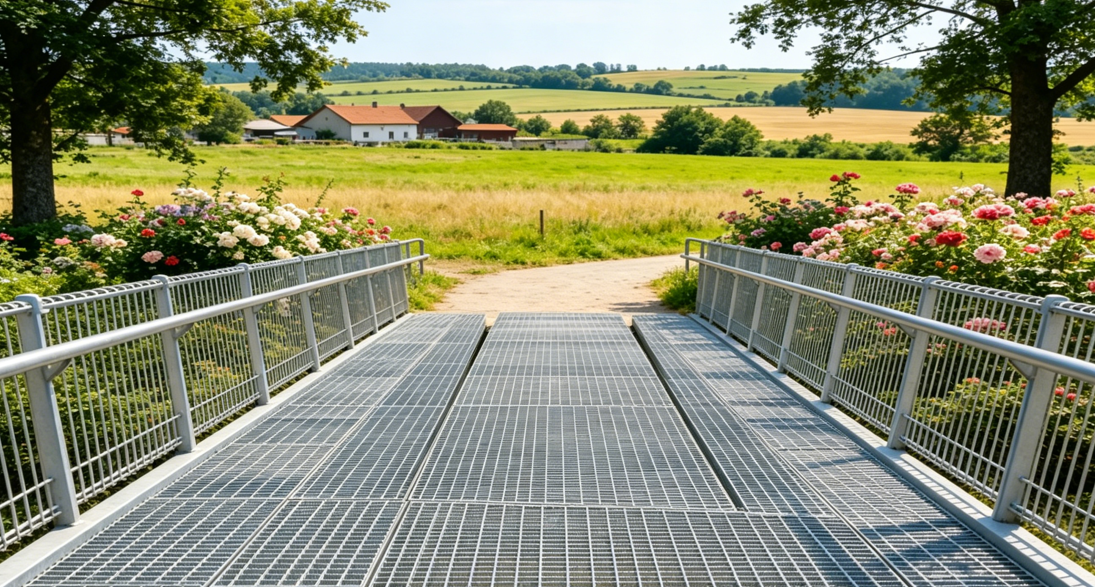
Raw panels straight off the welding or pressing line rarely fit perfectly into complex industrial layouts. Secondary fabrication transforms standard rectangular panels into highly customized, installation-ready components. This phase demands advanced engineering detailing and precise mechanical execution to ensure the grating drops seamlessly into the structural steel framework on site.
Serrated steel grating improves safety by adding notches or teeth to the top edges of bearing bars, increasing surface grip in slippery environments. It is commonly used in wet, oily, icy, or offshore applications where slip resistance is critical.
The serrated design slightly reduces the load-bearing area, so engineers may need to adjust the grating depth to maintain required strength. Manufacturers provide different serration options, from standard notches to more aggressive profiles designed for extreme conditions with higher slip risks.
Composite steel grating combines the load-bearing strength of grating panels with the closed surface of solid metal plates. A diamond plate or checker plate is welded onto the grating to prevent objects from falling through while improving panel stiffness. This design is commonly used above machinery, electrical equipment, or work areas where debris protection is required. The added top plate also helps reduce deflection under heavy loads and improves overall safety.
Customizing the footprint of the panel is mandatory for seamless installation around existing infrastructure. Trimming involves cutting the raw panels to exact length and width dimensions. Once cut, the open ends of the bearing bars must be sealed to restore structural integrity.
Banding: Welding flat bars to the open ends of the panels increases transverse stiffness and transfers loads effectively across the entire grid. Banding prevents individual bearing bars from buckling under edge loads and provides a safe, finished surface for handling during installation.
Precision Cut-Outs: Advanced manufacturers utilize CNC plasma or laser cutters to achieve exact geometries based on CAD layouts. This allows the grating to fit perfectly around pipe penetrations, structural columns, and custom stair treads.
Risk Mitigation: Factory-completed cut-outs prevent the need for field cutting. Field cutting severely compromises structural integrity, destroys protective coatings, and leaves raw steel exposed to immediate oxidation.
High-quality steel grating panels should be designed for quick and secure installation. Preparing fastening points during manufacturing reduces the need for on-site drilling or welding, helping improve construction efficiency.
Manufacturers can add welded lugs or provide accurate clearances for installation accessories such as saddle clips, Z-clips, and countersunk fasteners. Proper hardware preparation ensures the panels remain stable under vibration and dynamic loads. Defining the fastening method early allows the factory to prepare the correct details before galvanizing, ensuring accurate installation and long-term reliability.
Unprotected carbon steel deteriorates rapidly when exposed to moisture, chemicals, or saline environments. The final surface treatment applied to the Steel Grating dictates its maintenance cycle and overall lifespan. Selecting the appropriate finish requires a careful analysis of the installation environment and the expected chemical exposure.
Hot-dip galvanizing is a durable corrosion protection method for carbon steel. The process cleans the steel through degreasing, acid pickling, and fluxing before immersing the finished panel in molten zinc. This creates a strong zinc-steel bond with multiple protective layers, providing long-term resistance against corrosion in outdoor and harsh environments.
The zinc coating offers both barrier and cathodic protection, helping protect exposed steel even when minor surface damage occurs. However, the high temperature of the galvanizing process can cause panel distortion if not properly controlled. Reliable suppliers should use suitable cooling methods and post-galvanizing straightening procedures to maintain panel flatness and dimensional accuracy.
While galvanizing is the standard, specific applications require alternative surface treatments based on operational needs.
Specialized polyurethane paints or powder coatings are necessary for environments requiring extreme chemical resistance or for color-coding safety zones (e.g., painting walkway edges safety yellow). Powder coating provides a thick, durable barrier but lacks the cathodic protection of zinc.
Bitumen dipping is sometimes utilized for buried trench covers or highly acidic environments where zinc would rapidly degrade.
Mill finish (untreated raw steel) is appropriate only when the grating will be custom-fabricated, welded, and coated on-site by the end-user. Shipping mill finish panels requires rapid installation and immediate field-coating to prevent flash rust from forming during transit.
Verifying the structural capability of the finished product requires rigorous in-house testing and strict adherence to established engineering standards. Procurement teams must demand documentation proving that the panels meet the exact specifications required for safe operation. Relying on visual inspections alone is insufficient for load-bearing infrastructure.
Manufacturers perform load tests to verify that steel grating panels can safely handle required loads. Testing includes concentrated loads, such as heavy wheels or equipment supports, and uniform loads distributed across the panel surface. Engineers also measure panel deflection under maximum loads to ensure structural stability. Excessive deflection can cause fatigue, weld damage, and an unsafe walking surface, so maintaining proper strength and stiffness is essential for long-term performance.
High-tier manufacturers operate in strict accordance with recognized industry standards. Requiring supplier documentation proving adherence to the ANSI/NAAMM MBG 531 standard (Metal Bar Grating Manual) is non-negotiable. This standard dictates precise tolerances for bar spacing, cross bar alignment, overall panel squareness, and weld integrity. Compliance guarantees that the product will perform exactly as specified in the engineering load tables.
Robust quality control departments conduct thorough visual and structural inspections before shipping. Inspectors look for specific defects that compromise safety or aesthetics.
Defect Type | Visual Indicator | Structural Consequence |
|---|---|---|
Cold Welds | Lack of fusion between cross bar and bearing bar; visible gaps. | Panel loses rigidity; cross bars can pop out under dynamic loads. |
Zinc Pooling / Spikes | Thick globs or sharp icicles of zinc hanging from the bottom of the grating. | Creates tripping hazards, interferes with structural steel seating, and prevents proper clip installation. |
Out-of-Square Panels | Diagonal measurements of the panel do not match. | Panels will not align properly on support beams, leaving dangerous gaps in the flooring system. |
Inconsistent Bar Spacing | Visible bowing or uneven gaps between bearing bars. | Alters load distribution, creating weak points that fail under concentrated loads. |
Selecting a manufacturing partner involves more than comparing unit costs. The supplier's operational capabilities directly impact project timelines, installation efficiency, and long-term structural safety. A cheap panel that requires extensive field modification will ultimately cost more in labor and downtime.
Large-scale industrial projects require massive quantities of grating delivered on strict schedules. Evaluating a manufacturer's ability to handle high-volume orders without compromising lead times or quality control is essential. Buyers should assess the supplier's automated welding capacity, raw material inventory levels, and shift structures to ensure they can meet aggressive project deadlines without rushing the fabrication or galvanizing processes.
The most valuable suppliers act as technical partners rather than mere fabricators. Suppliers who provide comprehensive layout drawings, precise load tables, and installation fastening recommendations based on the specific manufacturing process used save thousands of dollars in field labor. In-house detailing teams translate complex structural blueprints into exact panel fabrication drawings, ensuring every cut-out, banded edge, and support clearance is perfectly engineered before production begins. This support drastically reduces field errors and installation delays.
To ensure project success, take the following next steps:
Consult with structural engineers to define exact uniform and concentrated load requirements for your specific application.
Request detailed product specifications, mill test reports, and NAAMM compliance certifications from all shortlisted suppliers.
Procure sample panels to conduct physical quality verification of weld integrity, bar spacing tolerances, and galvanizing finish before committing to bulk orders.
Provide detailed structural blueprints to the manufacturer to utilize their in-house detailing services for optimized panel layouts and factory cut-outs.
A: Forge-welding is the industry standard for industrial load-bearing applications. It utilizes high electrical voltage and hydraulic pressure to fuse cross bars directly into bearing bars without filler metal. This creates a permanent, single-piece rigid panel that offers an exceptional strength-to-weight ratio, making it ideal for heavy-duty platforms, walkways, and industrial flooring.
A: The process dictates how forces are distributed. Forge-welding creates a permanent metallurgical fusion, offering maximum rigidity for heavy static loads. Press-locking relies on mechanical deformation, which is excellent for pedestrian loads but may shift under extreme dynamic forces. Riveting creates a truss-like grid that excels at distributing heavy impact and rolling loads.
A: Banding involves welding flat steel bars to the open ends of a cut panel. It seals the open edges, significantly increases transverse stiffness, and prevents individual bearing bars from distorting or buckling under heavy loads. It also provides a safe, finished edge that ensures secure alignment during installation.
A: Top manufacturers utilize CAD detailing to pre-engineer panels specifically for the installation environment. They perform factory cut-outs for pipe penetrations, weld on banding for edge support, and prepare exact clearances for fastening hardware. This ensures panels drop directly into structural frameworks without requiring dangerous or time-consuming on-site modifications.
A: While field cutting is physically possible, it is highly discouraged. Cutting panels on-site compromises their engineered load capacity and destroys the protective hot-dip galvanized coating, leaving raw steel exposed to rapid corrosion. All necessary cut-outs and sizing should be completed at the factory prior to the final surface treatment.
A: You should require documentation proving strict adherence to the ANSI/NAAMM MBG 531 standard (Metal Bar Grating Manual). This standard governs critical manufacturing tolerances, including bearing bar spacing, cross bar alignment, weld integrity, and maximum load deflection limits, ensuring the final product is structurally sound and safe.


