
Views: 0 Author: Site Editor Publish Time: 2026-08-31 Origin: Site


Grating fastener failure introduces severe operational risks across industrial environments. Improper clip selection directly causes structural instability, creating immediate safety hazards for personnel and heavy equipment. Unplanned maintenance downtime inevitably follows when grating panels shift, warp, or detach under load. Securing bar grating in highly corrosive, high-vibration, or hazardous environments presents a distinct engineering challenge. Traditional welding constitutes hot work, which is often strictly prohibited in active chemical or petrochemical facilities. Drilling into structural steel is labor-intensive and permanently degrades the grating's protective finish. Specifying the correct stainless steel grating clips resolves these installation issues. Engineers and facility managers must evaluate material grades carefully. You must analyze mechanical fastener designs, such as saddle clips and friction fasteners, to match dynamic loads. Precise bar grating dimensions ultimately dictate the final hardware selection to ensure long-term structural integrity.
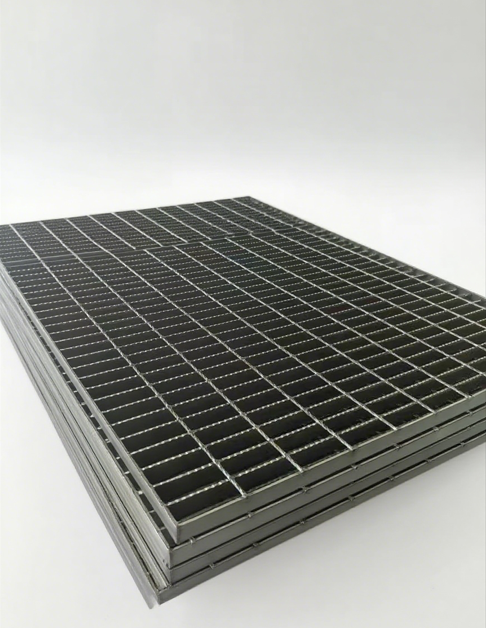
Material Specification: 316 stainless steel is mandatory for marine and heavy chemical environments, while 304 stainless steel suffices for standard moisture exposure.
Fastener Compatibility: Clip selection must strictly align with bearing bar spacing (e.g., 19-space, 15-space), bar width, and grating height to ensure adequate clamping force.
Installation Efficiency: Mechanical grating fasteners eliminate the need for drilling, tapping, or welding, significantly reducing labor costs and facility downtime.
Vibration Management: Friction-based top-and-bottom clip assemblies provide superior holding strength against dynamic loads and vibration compared to standard J-bolts.
Table of Contents
Industrial environments expose structural components to aggressive chemical agents and constant moisture. Galvanized carbon steel relies entirely on a superficial zinc coating for protection. Once a dropped tool scratches this coating or heavy foot traffic wears it down, the underlying carbon steel oxidizes rapidly. Stainless steel provides superior chemical resistance through its inherent chromium oxide passive layer. This self-repairing layer prevents deep structural oxidation even when the surface sustains mechanical damage.
Petrochemical plants expose grating to volatile hydrocarbons and acidic byproducts. Offshore oil rigs subject flooring systems to continuous saltwater spray and high chloride concentrations. Wastewater treatment facilities generate hydrogen sulfide gas, which severely attacks standard carbon steel. In these aggressive environments, stainless steel fasteners maintain their mechanical grip strength and resist catastrophic failure far longer than their galvanized counterparts. We see galvanized clips rust through and snap within months on offshore platforms, whereas properly specified stainless hardware lasts for decades.
Traditional grating installation methods compromise the very materials they aim to secure. Field welding burns through galvanized coatings, leaving the connection point entirely unprotected against rust. Drilling holes into structural support beams weakens the flange. It also creates localized stress concentrations and introduces new entry points for moisture and corrosive agents. You cannot simply drill into a primary load-bearing I-beam without consulting a structural engineer, which delays projects.
Mechanical stainless clips eliminate these destructive installation practices. They clamp directly onto the existing structural members without altering the steel matrix. This cold-work fastening approach preserves the factory-applied protective finishes on both the grating panels and the underlying support beams. Maintaining this structural integrity prevents localized corrosion points from developing into widespread structural degradation.
Procurement teams often notice the higher upfront material cost of stainless steel hardware. However, evaluating fasteners strictly on initial purchase price ignores long-term operational realities. Galvanized fasteners in harsh environments require frequent inspection, retightening, and eventual replacement. Each replacement cycle demands scaffolding, labor hours, and potential facility shutdowns.
Stainless steel fasteners drastically extend the maintenance interval. They resist the environmental degradation that causes carbon steel clips to seize, snap, or rust away. This durability translates directly into substantial long-term savings. The reduction in ongoing maintenance hours, replacement hardware procurement, and operational disruption easily offsets the initial material investment. When you factor in the labor rate for a two-man maintenance crew replacing rusted clips over a weekend shutdown, the stainless steel upgrade pays for itself during the first maintenance cycle.
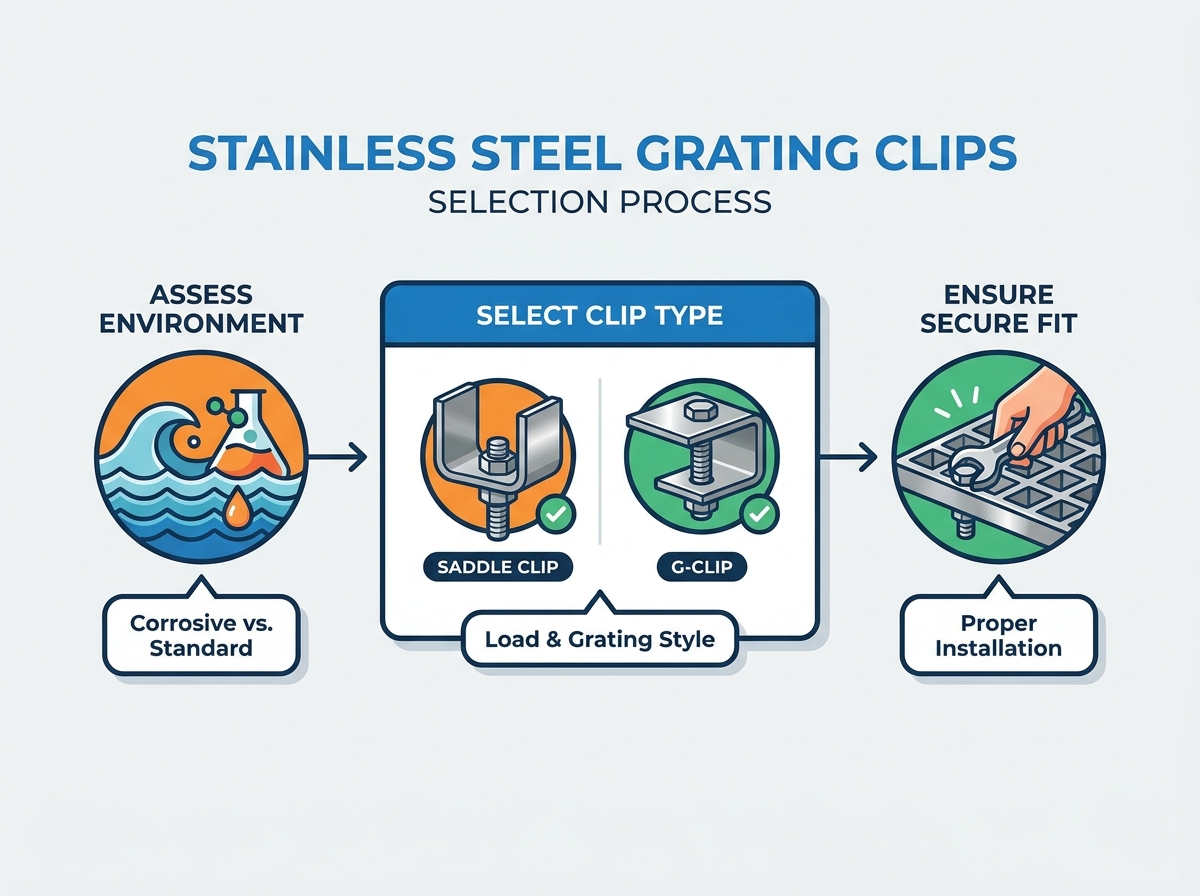
Saddle clips, frequently referred to as M-clips, represent the most common mechanical fastening solution for open bar grating. They feature a distinct U-shaped or M-shaped profile designed to bridge two adjacent bearing bars. The center of the clip contains a pre-punched hole to accommodate a threaded bolt. Installers pass the bolt through the clip, between the grating bars, and secure it to the structural support below.
These fasteners excel in applications involving static loads and minimal structural movement. However, standard saddle clips possess specific installation limitations. Securing them requires access to the underside of the structural support beam to attach the nut and washer. This two-person installation process becomes highly inefficient or completely impossible over enclosed tanks, open water, or blind sumps. If you drop a nut while working over a clarifier tank, you lose time and material.
Friction-based fasteners engineer a solution for complex installation scenarios. These specialized assemblies utilize a top-and-bottom clamping mechanism. The top component grips the grating bars, while the patented bottom connector hooks under the structural beam flange. Tightening the central hex bolt draws the two components together, creating massive friction and clamping force.
The primary advantage of these fasteners lies in their top-side-only installation capability. A single operator can install the entire assembly from above the grating deck. This eliminates the need for scaffolding, manlifts, or under-beam access. These fasteners accommodate varying flange thicknesses and provide exceptional resistance to lateral shifting.
To install a friction-based fastener correctly, follow these field steps:
Drop the assembled clip through the grating opening so the bottom jaw clears the bearing bars.
Slide the entire assembly laterally until the bottom jaw hooks completely under the structural steel flange.
Align the top saddle component so it sits squarely over two adjacent bearing bars.
Use a calibrated torque wrench to tighten the hex bolt to the manufacturer's specified rating, locking the assembly in place.
J-bolts represent a legacy anchoring method still found in older industrial facilities. The fastener consists of a threaded rod bent into a hook shape at the lower end. The hook wraps around the structural beam flange, while the threaded top extends through the grating to receive a saddle clip and nut.
While inexpensive, J-bolts exhibit severe vulnerabilities in modern industrial applications. They loosen rapidly under continuous vibration. Heavy machinery or forklift traffic causes the J-bolt to shift, rotate, and eventually lose its grip on the beam flange. Z-clips offer a slight improvement by providing a more rigid hold-down profile, but they still require under-deck access and struggle to maintain torque under dynamic loading conditions. Engineers now largely replace these legacy methods with friction-based assemblies.
Fastener Type | Installation Access Required | Vibration Resistance | Primary Application | Reusability |
|---|---|---|---|---|
Saddle Clips (M-Clips) | Top and Bottom | Low to Moderate | Static loads, pedestrian walkways | High |
Friction Fasteners (G-Clips) | Top-Side Only | High | Dynamic loads, blind installations | High |
J-Bolts | Top and Bottom | Poor | Legacy systems, light duty | Low (threads often strip) |
Z-Clips | Top and Bottom | Moderate | Hold-down applications | Moderate |
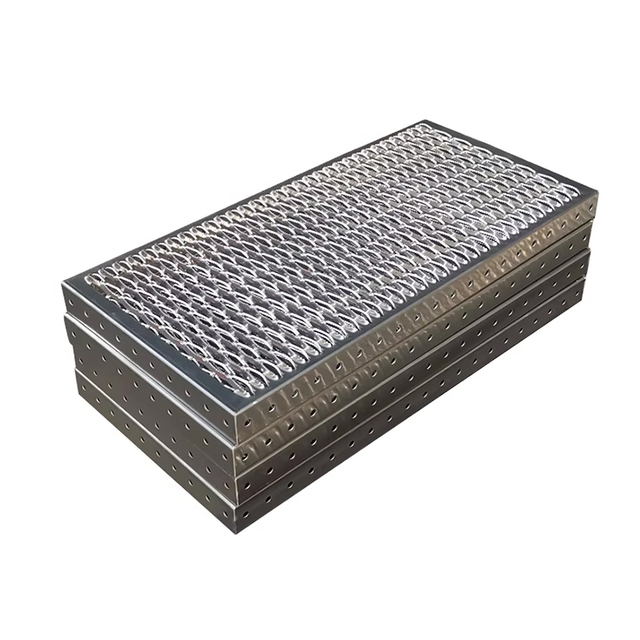
Selecting the correct clip requires precise alignment with the grating's physical dimensions. Fasteners are not universally interchangeable. Bearing bar spacing dictates the width of the top clip component. Standard industrial grating typically utilizes a 19-space profile, meaning bearing bars sit 1-3/16 inches on center. Other applications use a 15-space profile with bars at 15/16 inches on center. The chosen clip must bridge these specific gaps perfectly. If the clip is too narrow, it will slip between the bars. If it is too wide, it will not seat properly, resulting in inadequate clamping force and eventual panel failure.
Close mesh grating presents unique fastening challenges. Facilities use close mesh profiles for ADA compliance, high-heel traffic, or dropping hazard prevention. Standard saddle clips cannot fit between these tightly spaced bearing bars. Securing this material requires specialized narrow-profile fasteners. Close-grip models utilize a highly tapered top component that slides between tight tolerances without forcing the bearing bars apart. Forcing a standard clip into a close mesh panel warps the structural bars and compromises the grating's load-bearing capacity.
Installers must also evaluate bar height and flange thickness. The bottom connector of a friction-based fastener must reach under the grating and wrap around the structural steel flange. Grating heights range from 3/4 inch to over 2-1/2 inches. Support beam flanges vary from 1/4 inch to over 1 inch thick. The fastener assembly must possess enough vertical travel to accommodate the combined thickness of the grating and the flange while maintaining thread engagement on the bolt.
Grating Profile Designation | Bearing Bar Spacing (Center-to-Center) | Compatible Clip Top Width | Typical Application |
|---|---|---|---|
19-W-4 | 1-3/16 inches | Standard Industrial Width | Catwalks, platforms, trenches |
15-W-4 | 15/16 inches | Medium Width | Pedestrian areas, light cart traffic |
11-W-4 | 11/16 inches | Narrow Profile (Close Grip) | ADA compliant walkways |
7-W-4 | 7/16 inches | Ultra-Narrow Profile | High-heel traffic, fine debris screening |
Engineers must specify the correct stainless steel alloy to match the environmental corrosivity. Type 304 and Type 316 represent the most common grades for industrial fasteners. Type 304 contains 18% chromium and 8% nickel. It provides excellent resistance to standard atmospheric corrosion, washdown chemicals, and organic acids. Facilities commonly deploy 304 stainless fasteners in food processing plants, breweries, and general manufacturing environments where moisture is present but harsh chemicals are absent.
Type 316 stainless steel includes an additional 2% to 3% molybdenum. This specific alloy addition fundamentally alters the metal's performance. Molybdenum provides exceptional resistance to pitting and crevice corrosion caused by chloride exposure. Marine environments, offshore platforms, and coastal facilities mandate 316 stainless steel. Heavy chemical processing plants handling sulfuric acid, chlorides, or harsh solvents also require 316 alloy. Specifying 304 stainless in a chloride-rich environment will result in rapid pitting and premature fastener failure.
Industrial flooring systems rarely experience purely static loads. Heavy machinery generates continuous high-frequency vibration. Forklifts and pallet jacks introduce severe dynamic rolling loads. These forces transfer directly from the grating panels into the fasteners. Standard slotted hardware and basic saddle clips struggle to maintain their grip under these conditions. The vibration causes standard nuts to back off the threads, loosening the entire assembly.
Friction-based fasteners engineer specific solutions for dynamic loads. They utilize unique top designs that bite into the bearing bars. Their patented bottom connectors maximize surface contact with the beam flange. Furthermore, high-performance clips utilize hex-head bolts rather than slotted or Phillips heads. Hex-head bolts allow installers to apply precise, secure torque using calibrated tools. This ensures the fastener achieves maximum mechanical grip strength, preventing the grating from shifting or rattling under heavy vehicular traffic.
Active industrial facilities operate under strict safety protocols. Welding grating panels to support beams constitutes hot work. Executing hot work in a petrochemical plant, grain elevator, or active manufacturing floor requires extensive permitting. It demands fire watches, gas sniffing, and often partial facility shutdowns to isolate explosive hazards. Drilling structural steel generates metal shavings and requires heavy magnetic drill presses.
Mechanical fastening provides a cold-work alternative. Crews can install stainless steel grating clips using standard hand tools without triggering hot work protocols. This drastically accelerates installation timelines and eliminates severe safety risks. You bypass the permit office entirely and keep the facility running while maintenance crews secure the flooring.
Mechanical fasteners require precise tension to function correctly. The industry standard for most bent clips and saddle clips utilizes a 5/16-inch bolt hole. Installers must adhere strictly to the manufacturer's recommended torque specifications, which typically range between 60 and 100 inch-pounds depending on the hardware design.
A common field error involves over-tightening the fasteners using pneumatic or high-torque impact wrenches. Exceeding the torque limits causes severe mechanical issues. It can strip the threads on the bolt or the bottom connector. More critically, excessive torque can deform the grating bearing bars, bending them inward and compromising the panel's structural integrity. Installers should use calibrated manual torque wrenches to ensure secure, damage-free installation.
Mixing dissimilar metals in industrial environments introduces the risk of galvanic corrosion. This electrochemical process occurs when two different metals come into physical contact in the presence of an electrolyte, such as saltwater or high humidity. The less noble metal (the anode) corrodes rapidly to protect the more noble metal (the cathode).
Installing stainless steel grating clips directly onto galvanized carbon steel grating or aluminum grating creates a bimetallic couple. In wet environments, the galvanized zinc coating or the aluminum will sacrifice itself, leading to localized corrosion around the fastener. Engineers mitigate this risk by utilizing isolation barriers. Applying neoprene washers, Teflon pads, or specialized dielectric coatings between the stainless clip and the dissimilar grating prevents the electrochemical reaction while maintaining structural security.
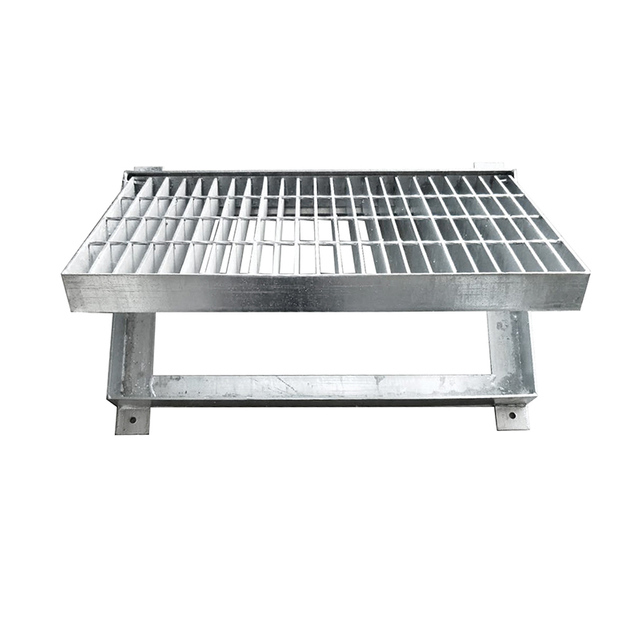
Project managers must balance material expenses against labor efficiency. Specialized friction fasteners, such as G-Clips and GrateFix models, carry a higher unit cost than standard galvanized saddle clips or J-bolts. However, the labor savings heavily outweigh the material premium.
Standard clips require two workers—one above the deck and one below on scaffolding—to secure a single connection. Friction fasteners allow a single worker to secure the panel entirely from the top side in a fraction of the time. When calculating the cost of erecting scaffolding, managing manlifts, and paying two installers, the higher-priced mechanical fastener actually reduces the total installation budget significantly. We consistently see top-down fasteners cut installation man-hours by up to 60% on large-scale industrial projects.
Industrial facilities require frequent access to sub-floor systems. Piping, electrical conduits, and drainage channels run directly beneath grating walkways. Welded grating panels make sub-floor maintenance incredibly difficult. Maintenance crews must grind off the welds, remove the heavy panels, and re-weld them after completing the repairs. This process destroys the grating and consumes massive amounts of time.
Mechanical clips provide immediate maintenance accessibility. Crews simply unbolt the fasteners, lift the panel, and reinstall the exact same hardware once the work concludes. This removability is necessary for efficient facility operations. You do not want a simple valve replacement under the floor to turn into a multi-day welding project.
Large industrial complexes often struggle with inventory bloat. Stocking dozens of different fastener profiles, bolt lengths, and clip designs complicates procurement and confuses maintenance teams. Standardizing a specific clip model across a facility streamlines operations.
By selecting a versatile friction-based fastener that accommodates multiple flange thicknesses and grating profiles, procurement teams reduce inventory complexity. Maintenance crews become highly proficient at installing one standard system, reducing errors and accelerating repair times across the entire plant. You keep one type of clip in the tool crib, and it works for 90% of the flooring applications on site.
For industrial projects requiring reliable grating systems and fastening solutions, Foshan Tianhe Steel Grating Co., Ltd. specializes in the research, development, manufacturing, and export of steel grating, trench covers, ladders, handrails, fencing, and related products. With professional grating design capabilities, advanced production equipment, and standardized quality management, Tianhe Grating supports customized solutions for demanding industrial and infrastructure applications.
Verify your exact grating specifications, including bearing bar spacing, bar height, and structural flange thickness, before ordering hardware.
Consult manufacturer load tables to confirm the required clamping force and torque specifications for your specific dynamic loads.
Audit your facility for dissimilar metal contact points and procure necessary neoprene or Teflon isolation barriers to prevent galvanic corrosion.
Request technical submittals or physical product samples from the manufacturer to conduct on-site fitment and field testing prior to bulk procurement.
A: The industry standard bolt hole size for most bent clips and saddle clips is 5/16 inch. This dimension accommodates standard 5/16-inch carriage bolts or hex-head bolts, providing sufficient tensile strength for securing grating panels without requiring excessively large hardware that might interfere with pedestrian traffic.
A: Yes, but you must address galvanic corrosion risks. Stainless steel is more noble than galvanized zinc. In wet environments, direct contact causes the zinc to corrode rapidly. It is permissible in strictly dry environments. In wet conditions, you must use isolation barriers like neoprene washers to separate the dissimilar metals.
A: The industry standard rule of thumb requires a minimum of four clips per standard grating panel. Installers place these clips near the four corners of the panel. For longer spans or areas experiencing heavy dynamic loads, additional clips are required at intermediate support points to prevent shifting.
A: A saddle clip uses a basic U-shaped bridge design that requires access to the underside of the beam to attach a nut. A G-clip is an engineered, friction-based fastener with a bottom connector that clamps directly to the beam flange, allowing for single-operator, top-side-only installation.
A: Yes, but standard clips will not fit. You must use specialized narrow-profile fasteners, such as close-grip models. These are engineered specifically with tapered top components to slide between tight bearing bar tolerances without warping or damaging the close mesh grating.
A: It depends on the clip design. Standard saddle clips and J-bolts require two-person, under-beam access to secure the bottom nuts. Friction-based fasteners, like G-Clips or GrateFix, are engineered specifically for single-operator, top-down installation, requiring zero access to the underside of the grating.


