
Views: 0 Author: Site Editor Publish Time: 2026-08-01 Origin: Site


Concrete possesses massive compressive strength but fails under tension. Reinforcement remains a non-negotiable requirement for structural longevity. Project managers and structural engineers face a daily balancing act on the job site. You need to mitigate cracks, distribute loads, and extend the lifespan of your slabs. At the same time, you battle rising labor costs, tight schedules, and material volatility. Traditional rebar handles heavy structural loads. However, steel wire mesh for construction provides a highly efficient, labor-saving alternative for specific concrete applications. We will look at how to specify, select, and install the right mesh for residential, commercial, and civil builds. You will learn to optimize structural integrity while keeping labor hours strictly in check.
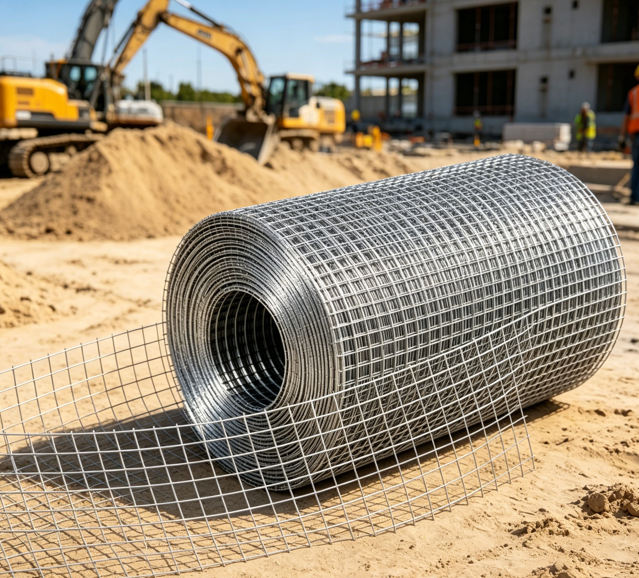
Labor Efficiency vs. Material Cost: Welded wire reinforcement (WWR) significantly reduces installation time compared to tying individual rebar, often offsetting higher upfront material costs and accelerating project schedules.
Application Specificity: Steel wire mesh is optimal for slab-on-grade, precast concrete, and temperature/shrinkage crack control, but cannot universally replace rebar in high-load structural columns or beams.
Corrosion and Coating Variables: Selecting the correct finish (bare, galvanized, or epoxy-coated) is critical based on the project's environmental exposure and required lifespan.
Standard vs. Custom Solutions: While standard rolls and panels suit basic flatwork, Custom Welded Wire Reinforcement (CWWR) allows engineers to specify exact wire sizes and spacing to eliminate material waste on complex commercial builds.
Strict Compliance Requirements: Proper specification requires adherence to ASTM standards (e.g., ASTM A1064) and precise grid/wire gauge sizing to meet engineering load requirements.
Table of Contents
You must define clear success criteria before pouring any concrete slab. Engineers specify steel mesh to achieve exact structural goals. The primary objective is preventing crack propagation. Concrete naturally shrinks and cracks as it cures. Mesh holds these micro-cracks tightly together. It prevents them from expanding into massive structural failures. Mesh also distributes localized loads across a wider surface area. This prevents heavy equipment, forklifts, or commercial vehicles from punching through a slab. Finally, reinforcement maintains structural integrity during extreme temperature fluctuations.
The mechanics of this reinforcement rely on physical locking. Welded mesh features rigid, fused intersections. When the crew pours concrete, the wet aggregate flows through the square grids. The fused joints act as mechanical anchors. They lock firmly into the cured concrete. This provides continuous tensile support across a two-dimensional plane. If the concrete attempts to pull apart, the steel grid resists the tension. This interaction transforms a brittle slab into a resilient structural element.
The interaction between the steel grid and the curing concrete follows a specific mechanical sequence:
Wet concrete encapsulates the steel grid, allowing the coarse aggregate to settle evenly around the fused joints.
As hydration occurs, the concrete shrinks and grips the wire tightly, creating a permanent bond.
The rigid intersections act as mechanical anchors, preventing the steel from slipping inside the hardened slab.
Tensile forces transfer directly from the concrete to the steel grid during heavy load events or ground settlement.
Temperature and shrinkage control represents the most common use case for mesh. Concrete undergoes significant volumetric changes during its lifecycle. It shrinks as water evaporates during the curing process. It also expands and contracts as environmental temperatures shift. Think of a massive 50,000-square-foot warehouse slab poured in the middle of summer. Without reinforcement, the temperature drop in winter will tear that slab apart. Steel wire mesh counteracts these natural forces. It provides the necessary tensile strength to keep the concrete mass unified.
Effective reinforcement directly impacts lifecycle durability. Minimizing surface cracks prevents water ingress. Water entering a slab can freeze, expand, and cause severe spalling. In industrial settings, cracks allow harsh chemicals to degrade the subbase. By controlling these cracks, mesh extends the lifespan of concrete structures. This reduces long-term maintenance and repair demands for facility owners. A well-reinforced slab performs better and lasts decades longer than unreinforced flatwork.
Contractors must choose the correct mesh type for their specific application. The industry distinguishes heavily between welded wire reinforcement (WWR) and woven mesh. Manufacturers create WWR by electronically fusing intersecting wires. This process creates a rigid grid. The intersections cannot move. This rigidity is mandatory for concrete reinforcement. The grid maintains its exact shape under the immense weight of wet concrete. Woven mesh uses interlocking wires without welds. It remains highly flexible. Contractors use woven mesh for fencing or security cages. You should never use woven mesh for concrete reinforcement.
Material grades and finishes dictate the environmental resilience of the mesh. Bright basic steel is the most common variant. It features uncoated, bare steel wires. You use bright basic mesh for interior flatwork. It works perfectly for fully encased concrete applications where moisture exposure remains minimal. The alkaline environment of the concrete protects the bare steel from rusting.
Exterior projects require upgraded finishes. Galvanized steel wire mesh features a protective zinc coating. Manufacturers dip the welded grid into molten zinc. This coating prevents early corrosion. You should specify galvanized mesh for exterior flatwork, retaining walls, or environments facing moderate moisture. It provides a crucial buffer against water penetration.
Extreme environments demand premium materials. Stainless steel and epoxy-coated mesh serve highly corrosive applications. Marine construction exposes concrete to saltwater. Chemical plants expose floors to harsh acids. Bridge decks face constant de-icing salt exposure. In these scenarios, standard steel will rust, expand, and destroy the concrete from the inside. Stainless or epoxy-coated options prevent this catastrophic failure.
Mesh Finish | Primary Characteristics | Ideal Construction Applications | Environmental Limit |
|---|---|---|---|
Bright Basic (Bare Steel) | Uncoated, highly economical, relies on concrete alkalinity for protection. | Interior warehouse floors, residential basement slabs, interior footings. | Fails in high-moisture or exterior environments. |
Galvanized (Zinc Coated) | Hot-dipped coating prevents rust, moderate corrosion resistance. | Exterior driveways, retaining walls, agricultural feed pads. | Degrades under constant saltwater or heavy chemical exposure. |
Epoxy-Coated | Thick polymer barrier blocks moisture and chlorides from reaching steel. | Bridge decks, parking garages, wastewater treatment plants. | Coating can chip during rough handling, exposing bare steel. |
Stainless Steel | Maximum corrosion resistance, highest upfront material cost. | Marine seawalls, chemical processing facilities, extreme freeze-thaw zones. | Overkill for standard residential or light commercial flatwork. |
Project scale determines how you purchase the material. Standard sheets and rolls suit basic residential and light commercial use. You can buy off-the-shelf sizes for driveways or small warehouse floors. However, large-scale projects benefit from Custom Welded Wire Reinforcement (CWWR). Manufacturers engineer CWWR to exact project specifications. You can vary wire sizes and spacing within a single panel. This eliminates excessive lap splicing. It drastically reduces material waste on massive commercial builds.
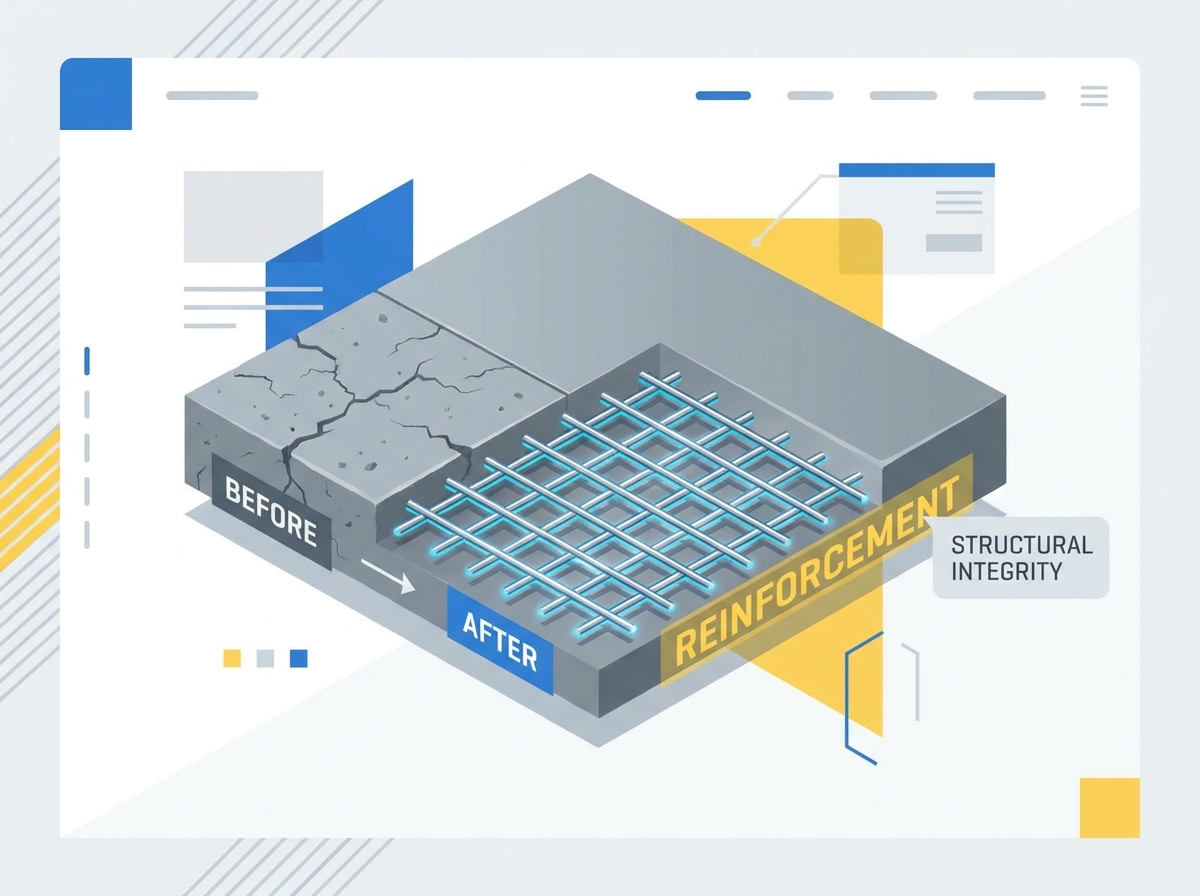
Engineers constantly evaluate mesh against traditional rebar. Yield strength and load capacity drive this decision. Standard WWR offers exceptional tensile strength. It often reaches 65,000 to 80,000 psi. Standard Grade 60 rebar provides 60,000 psi. Mesh excels in surface area coverage. It places steel closer together across a wide plane. This makes it superior for crack control. However, rebar remains mandatory for heavy structural tension. You must use rebar in footings, columns, and load-bearing beams. Rebar provides the necessary mass to handle concentrated structural loads.
Labor and installation efficiency heavily favor welded mesh. Tying individual rebar grids requires massive labor hours. Workers must manually cut, space, and tie every single intersection. Imagine a 50,000-square-foot warehouse pour. A five-man crew tying #3 rebar at 18-inch centers will take days to prep the deck. This process drains project schedules. Welded mesh arrives pre-fabricated. Crane operators can drop massive 8x20 foot panels directly onto the deck. A small crew can place thousands of square feet of mesh in hours. This time savings accelerates the entire construction schedule.
Smart project managers evaluate total installed cost. You cannot simply compare raw material costs per square foot. Mesh often costs more upfront than loose rebar. However, you must factor in labor hours and equipment needs. The massive reduction in tying labor usually makes mesh the more economical choice. Faster placement also means faster concrete pouring. This reduces crane rental time and overhead costs.
Application Factor | Welded Wire Mesh (WWR) | Traditional Rebar |
|---|---|---|
Tensile Strength | 65,000 to 80,000 psi (typical) | 60,000 psi (Grade 60 typical) |
Installation Speed | Extremely fast; pre-fabricated panels | Slow; requires manual tying on site |
Labor Requirement | Low; minimal crew needed for placement | High; requires dedicated ironworkers |
Placement Accuracy | High; rigid grids maintain exact spacing | Variable; depends on worker precision |
Primary Use Case | Slabs, precast, temperature/shrinkage control | Columns, footings, heavy structural beams |
Accurate specification requires understanding industry nomenclature. Engineers use specific codes to define gauge sizes and grid spacing. A common specification is 6x6 W1.4/W1.4. The first numbers indicate the grid spacing. It means the wires sit 6 inches apart in both directions. The "W" indicates smooth wire. A "D" would indicate deformed wire. The number 1.4 dictates the cross-sectional area of the wire. It represents 0.014 square inches. This precise naming convention ensures you order the exact steel area required by the structural design.
Follow these exact steps when reading and verifying a mesh specification sheet on site:
Check the grid spacing numbers first to ensure the longitudinal and transverse wires match the engineer's drawings.
Verify the wire type letter (W for smooth, D for deformed) to confirm the required concrete bonding characteristics.
Calculate the cross-sectional area by reading the final number (e.g., 4.0 means 0.040 square inches of steel).
Measure the physical wire diameter with calipers upon delivery to ensure it matches the specified W or D number.
Slab-on-grade and flatwork represent the highest volume use cases. Residential driveways typically require lighter mesh. Commercial parking lots demand heavier gauges to support truck traffic. Warehouse floors require precise specification. Forklifts exert massive point loads on warehouse slabs. You must specify a mesh heavy enough to distribute these loads and prevent surface spalling.
Precast concrete relies heavily on engineered mesh. Manufacturers use mesh in precast vaults, drainage pipes, and tilt-up wall panels. The rigid nature of WWR allows precast facilities to automate their production lines. Workers can drop pre-bent mesh cages directly into molds. Shotcrete applications also utilize mesh. Contractors pin the mesh to earth walls before spraying concrete for retaining structures or swimming pools.
Heavy civil and infrastructure projects demand rapid deployment. Bridge decks, tunnel linings, and massive retaining walls require heavy-gauge steel wire mesh. Public disruption is a major concern on civil projects. Closing highways costs money. Using massive CWWR panels allows contractors to reinforce bridge decks overnight. This speed minimizes traffic closures and accelerates infrastructure upgrades.
Structural integrity depends on strict adherence to industry standards. Engineers rely on ASTM specifications to ensure material quality. The critical standard is ASTM A1064/A1064M. This covers the Standard Specification for Carbon-Steel Wire and Welded Wire Reinforcement, Plain and Deformed, for Concrete. Materials must meet exact yield strength and weld shear strength requirements. If a weld breaks during pouring, the reinforcement fails. ASTM compliance guarantees the welds will hold under pressure.
The American Concrete Institute (ACI) dictates application rules. ACI 318 provides the building code requirements for structural concrete. It outlines the minimum steel requirements for temperature and shrinkage reinforcement. Engineers use these formulas to calculate exactly how much mesh a specific slab requires. Following ACI guidelines ensures the slab will perform safely over its intended lifespan.
Documentation and traceability protect contractors from liability. You must source materials from reputable manufacturers. Always demand certified mill test reports (MTRs). An MTR verifies the chemical composition and physical properties of the steel. The inspector looks at the MTR to confirm the yield strength, reduction of area, and carbon equivalent. It proves the mesh meets the specified engineering requirements. If a slab fails years later, these documents prove you installed compliant materials.
Modern construction also prioritizes sustainability. Specifying the right mesh can contribute to LEED certification. Many manufacturers produce steel wire mesh using high percentages of recycled steel scrap. Using recycled materials helps projects meet green building requirements. It reduces the environmental impact of the structure while maintaining full engineering compliance.
Poor installation ruins perfect engineering. The "bottom of the slab" problem is the most common failure point in flatwork. Workers often trample the mesh into the subgrade during the concrete pour. Mesh sitting at the bottom of the slab provides zero structural value. It must sit in the upper third of the slab thickness to control shrinkage cracks. You must mandate the use of proper supports. Use rebar chairs, continuous bolsters, or concrete dobies. These supports hold the mesh at the correct elevation before the pour begins.
Handling and storage present significant risks. Improper site storage leads to severe surface rust. Light oxidation is acceptable and actually improves concrete adhesion. However, heavy flaking rust reduces the wire diameter. This compromises the structural integrity of the mesh. Improper handling also causes physical deformation. Bent or twisted panels will not sit flat in the slab. You must implement strict storage protocols. Store mesh elevated off the ground. Cover it with tarps to prevent excessive moisture exposure. Always inspect the material prior to pouring.
Contractors must choose between rolls and rigid sheets. Rolls offer easier transport for small jobs. However, they introduce a massive installation risk known as "roll memory." Rolled mesh constantly tries to curl back up. Workers struggle to keep it flat during the pour. A worker steps on a roll, it springs back, and the finisher ends up with wire poking out of the bull-floated surface. This requires immediate patching and ruins the finish. Rigid flat panels eliminate this risk. Panels provide superior flatness and placement accuracy. They require flatbed transport, but the installation quality far outweighs the logistical challenge. Commercial projects should always specify flat panels over rolls.
Follow these rules for proper panel placement on site:
Overlap the panels by at least one full grid spacing plus two inches to ensure continuous load transfer.
Tie the overlapping panels securely with wire ties at 24-inch intervals to prevent shifting during the pour.
Place support chairs every three feet in all directions to prevent the mesh from sagging under the weight of the concrete workers.
Stagger the lap joints across the slab to avoid creating a continuous weak point in the reinforcement plane.
Consult your structural engineer to convert traditional rebar specifications into equivalent WWR layouts.
Mandate the use of continuous support chairs or dobies in your site quality control plans.
Request certified Mill Test Reports (MTRs) from your supplier before accepting any material deliveries.
Transition from rolled mesh to rigid flat panels to ensure accurate elevation in commercial slabs.
For construction and infrastructure projects requiring reliable metal reinforcement and grating solutions, Foshan Tianhe Steel Grating Co., Ltd combines product development, large-scale manufacturing, advanced production equipment, and CAD-supported design capabilities. Its product portfolio covers steel grating, steel wire mesh, fencing, trench covers, and other metal solutions for a wide range of engineering applications.
A: It replaces rebar for slab-on-grade and shrinkage control. It cannot replace rebar for heavy structural load-bearing elements. Footings, columns, and heavy beams require the mass and specific placement of traditional rebar. Mesh excels in distributing surface loads and preventing cracks across wide, flat areas.
A: Welded wire mesh features fused intersections. These rigid joints lock into concrete aggregate for structural reinforcement. Woven wire mesh consists of interlocking wires without welds. It remains flexible. Contractors use woven mesh for fencing, screening, or security cages, but never for concrete reinforcement.
A: The first numbers indicate grid spacing. It means 6 inches by 6 inches. The "W" stands for smooth wire. The number 1.4 represents the cross-sectional area of the wire in hundredths of a square inch (0.014 sq in). This nomenclature helps engineers specify exact steel requirements per square foot.
A: Light surface rust actually improves concrete adhesion. It creates a rougher texture for the concrete to grip. However, heavy flaking rust is dangerous. It reduces the effective wire diameter. This compromises structural integrity. Always inspect materials before pouring and reject heavily corroded sheets.
A: You must use rebar chairs or concrete dobies. These supports hold the mesh at the correct elevation before the pour begins. Never rely on the "hook and pull" method. Pulling mesh up during the pour guarantees uneven placement. The mesh usually sinks back to the bottom.
A: Rolls are easier to transport for small residential jobs. However, they suffer from "roll memory" and constantly curl upward. Rigid flat panels provide superior flatness. They ensure accurate placement within the slab. Engineers strongly prefer flat panels for commercial projects to maintain structural integrity.


