
Views: 0 Author: Site Editor Publish Time: 2026-05-07 Origin: Site


Have you ever considered how accessible public spaces truly are? With the right materials, we can make a difference. This article explores FRP grating and its role in ADA compliance.
You’ll learn about the importance of accessibility and how FRP grating meets these essential standards. Join us as we delve into its features, benefits, and applications.
The Americans with Disabilities Act (ADA) was enacted in 1990, marking a significant milestone in the fight for civil rights for individuals with disabilities. This landmark legislation aimed to eliminate discrimination and ensure equal opportunities in all areas of public life. The ADA set forth guidelines for accessible design, promoting independence and inclusion for people with disabilities in workplaces, public spaces, and transportation systems. In 2010, the Department of Justice updated the ADA Standards for Accessible Design, providing clearer guidelines for accessibility in facilities.
ADA compliance encompasses a range of requirements that facilities must adhere to in order to ensure accessibility for individuals with disabilities. Here are some key elements:
Maximum Opening Size: Openings in flooring surfaces, such as grating, must not exceed ½ inch in width. This is crucial to prevent wheelchairs and mobility aids from becoming stuck.
Surface Smoothness: Walking surfaces must be stable and firm. This means that surfaces should not only support weight but also provide a secure footing to prevent slips and falls.
Traction Performance: Surfaces must have a minimum static coefficient of friction. For level surfaces, this is set at 0.6, while ramps require a minimum of 0.8. This ensures safe navigation for all users, particularly those using mobility aids.
Slope Requirements: Ramps must follow a maximum slope ratio of 1:12, meaning for every inch of vertical rise, there should be at least 12 inches of ramp run. Cross slopes cannot exceed 1:48.
The ADA has profoundly influenced facility design by mandating that accessibility be a fundamental consideration in the planning and construction of public spaces. Architects and designers must integrate ADA standards into their projects right from the outset.
Facilities now prioritize accessible entrances, restrooms, and pathways. This has led to the widespread use of ADA-compliant materials, such as FRP grating, which provides safe and stable surfaces for all users. The focus on accessibility not only benefits individuals with disabilities but also enhances overall user experience, making spaces more welcoming and functional for everyone.
By understanding the history and requirements of the ADA, facility managers and designers can create environments that are not only compliant but also inclusive, ensuring that all individuals can navigate spaces safely and comfortably.
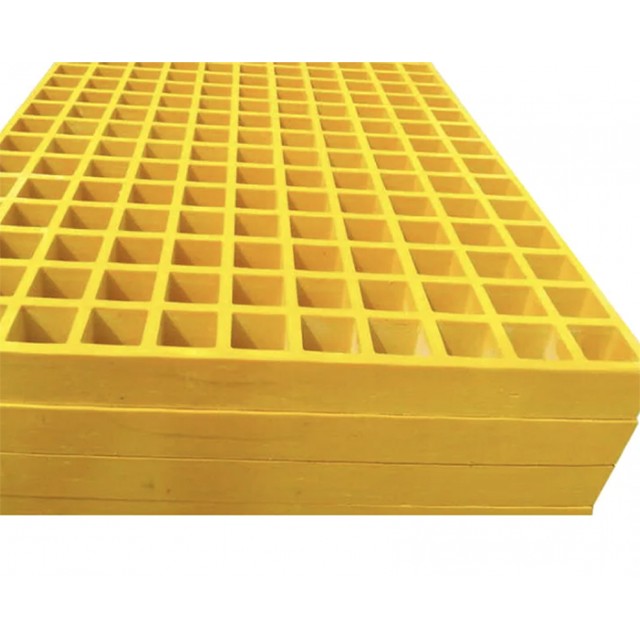
FRP grating, or fiberglass reinforced plastic grating, is a composite material made from a combination of thermosetting resin and continuous fiberglass rovings. The manufacturing process typically involves either molding or pultrusion. In molding, resin is mixed with fiberglass in precision molds, creating a strong and durable product. Pultrusion, on the other hand, involves pulling fiberglass through a resin bath and then through a heated die to form the desired shape. This process results in a consistent and high-quality grating that is lightweight yet strong.
The composition of FRP grating contributes to its unique properties, such as corrosion resistance, UV stability, and fire retardance. These features make FRP grating suitable for various applications, especially in environments where traditional materials like metal would corrode or deteriorate.
FRP grating offers several advantages, particularly in terms of safety and accessibility. Here are some key benefits:
Corrosion Resistance: FRP does not rust, making it ideal for wet or corrosive environments, such as wastewater treatment plants or marine applications.
Lightweight: Compared to metal grating, FRP is significantly lighter, which simplifies installation and reduces transportation costs.
Slip Resistance: Many FRP grating products come with a textured surface that enhances traction, making them safer for pedestrian use.
Customizability: FRP grating can be manufactured in various shapes, sizes, and colors, allowing for tailored solutions that meet specific project requirements.
Cost-Effectiveness: Although the initial investment might be higher than traditional materials, the long lifespan and low maintenance of FRP grating often lead to lower overall costs.
When comparing FRP grating to other materials such as aluminum or steel, several factors stand out:
Weight: FRP is much lighter than steel or aluminum, making it easier to handle and install.
Corrosion Resistance: Unlike metal, FRP does not corrode, which is a critical factor in many industrial settings.
Cost: While metal grating may have a lower upfront cost, the long-term maintenance and replacement costs of FRP can be more economical.
Safety: FRP grating typically provides better slip resistance than metal options, which can become slick when wet.
When designing spaces that accommodate individuals with disabilities, it’s crucial to understand the key features of ADA-compliant FRP (Fiberglass Reinforced Plastic) grating. These features ensure safety, stability, and accessibility. Here are the primary elements that define ADA compliance in FRP grating:
ADA regulations specify that the maximum permissible opening in grating surfaces should not exceed ½ inch in width. This restriction minimizes the risk of mobility aids, such as wheelchairs and crutches, getting stuck. For grating with elongated openings, they must be oriented so that the long dimension is perpendicular to the primary direction of travel. This orientation further enhances safety by reducing the likelihood of entrapment.
Walking surfaces must be stable and firm, providing a secure footing for all users. FRP grating should feature a solid construction that prevents excessive flexing under load. This stability is vital for individuals using mobility aids, as any movement can lead to slips or falls. Moreover, the texture of the surface plays a significant role. While some grating may have an open mesh design, a filled or flush top surface is preferable for accessible routes. This design ensures a smooth experience for wheelchair users while maintaining traction.
Slip resistance is a critical factor in ADA compliance. The ADA mandates that walking surfaces should have a static coefficient of friction of at least 0.6 for level surfaces and 0.8 for ramps. This standard is essential, especially in areas prone to moisture or contaminants. To meet these requirements, manufacturers often add grit to the top surface of the FRP grating. This addition enhances traction, ensuring safe navigation for all users, particularly those who rely on mobility aids.
FRP grating plays a vital role in ensuring accessibility across various environments, particularly in pedestrian paths, ramps, and transit stations. These applications highlight how FRP grating not only meets ADA standards but also enhances safety and usability for all individuals, including those with disabilities.
In public spaces like parks, waterfronts, and urban walkways, FRP grating provides a stable, slip-resistant surface. Its lightweight nature makes installation easier while maintaining structural integrity. The tight spacing of openings (not exceeding ½ inch) prevents mobility aids from becoming stuck, allowing smooth navigation. For example, molded FRP grating with a gritted surface ensures a firm footing, even in wet conditions. This durability and safety make it an ideal choice for high-traffic pedestrian areas.
Ramps are crucial for accessibility, and FRP grating excels in this application. The ADA mandates a maximum slope of 1:12 for ramps, ensuring that individuals using wheelchairs can navigate without difficulty. FRP grating’s lightweight design allows for easy installation, while its strength-to-weight ratio maintains the necessary structural integrity. Additionally, the gritted surface provides the required traction, achieving a static coefficient of friction of at least 0.8. Edge protection features, like railings, further enhance safety, preventing wheelchairs from slipping off.
Transit stations and platforms demand high safety standards due to the volume of foot traffic. FRP grating is frequently used in these environments because it meets ADA compliance while offering durability and slip resistance. The grating’s openings can be designed to allow water drainage, preventing pooling that could lead to slips. Furthermore, tactile warning surfaces can be integrated into the grating to alert visually impaired passengers about platform edges. This combination of features ensures that transit stations remain accessible and safe for all users.
FRP grating, or fiberglass reinforced plastic grating, is increasingly recognized for its advantages in creating accessible environments. When it comes to ADA compliance, the benefits of FRP grating are multifaceted, encompassing durability, safety, and economic efficiency. Here’s a closer look at why FRP grating stands out as a preferred choice for accessibility.
One of the primary benefits of FRP grating is its exceptional corrosion resistance. Unlike traditional metal grating, which can rust and degrade over time, FRP grating remains robust in harsh environments. This makes it particularly suitable for areas exposed to moisture, chemicals, or corrosive substances, such as wastewater treatment facilities and marine applications. The durability of FRP means it can withstand heavy foot traffic and harsh weather conditions without compromising safety or performance. This longevity translates to lower replacement costs over time, making it a wise investment for facility managers.
FRP grating is highly customizable, allowing it to be tailored to meet specific project needs. It can be manufactured in various sizes, shapes, and colors, enabling designers to create solutions that blend seamlessly with their environment. Whether it's for pedestrian walkways, ramps, or industrial applications, FRP grating can be adapted to fit the unique requirements of each project. This flexibility not only enhances aesthetic appeal but also ensures compliance with ADA standards, as the grating can be designed to meet specific opening sizes and surface conditions.
While the initial cost of FRP grating may be higher than that of traditional metal options, its long-term cost-effectiveness is undeniable. The low maintenance requirements, coupled with its longevity, mean that facility managers can save significantly over time. Additionally, the lightweight nature of FRP grating simplifies installation, reducing labor costs and downtime during installation. This efficiency is particularly beneficial in busy public spaces where minimizing disruption is a priority.
FRP grating is essential for ensuring accessibility in public spaces. Its ADA compliance features include maximum opening size regulations, surface smoothness, and slip resistance. As facility managers prioritize safety, FRP grating's corrosion resistance and customizability make it a valuable choice. Future trends will likely focus on innovative designs that enhance compliance and usability. For facility managers and designers, investing in FRP grating from Tianhe ensures safe, durable, and welcoming environments for all users.
A: FRP grating, or fiberglass reinforced plastic grating, is a durable material that meets ADA compliance by providing safe, slip-resistant surfaces for individuals with disabilities.
A: FRP grating features a maximum opening size of ½ inch and a textured surface to enhance traction, preventing wheelchairs from getting stuck and ensuring safe navigation.
A: FRP grating is lightweight, corrosion-resistant, and offers better slip resistance than metal, making it a more suitable option for creating accessible environments.
A: While FRP grating may have a higher initial cost, its durability and low maintenance lead to long-term savings, making it a cost-effective solution for ADA compliance.
A: To ensure ADA compliance, request certification documentation from manufacturers and verify that the FRP grating meets specifications for opening sizes and slip resistance.


