
Views: 0 Author: Site Editor Publish Time: 2026-01-05 Origin: Site


As we approach the 2026 fiscal year, the procurement landscape for industrial materials faces renewed volatility. Fluctuations in global raw material markets, particularly regarding nickel and chromium indices, are reshaping the cost structure of Steel Wire Mesh. For procurement managers and engineers, these shifts make accurate budget forecasting increasingly difficult. This creates a distinct business problem: the balancing act between risk and waste. You face the risk of over-engineering by specifying premium alloys where they are unnecessary, draining the budget. Conversely, under-engineering leads to rapid corrosion, structural failure, and expensive operational downtime.
Navigating this market requires more than just comparing price lists. It demands a technical understanding of alloy composition, weave types, and logistics. This article serves as a comprehensive framework for calculating Total Cost of Ownership (TCO). We will explore how to specify technical parameters accurately to prevent costly order returns. Furthermore, we will guide you on how to select the right stainless steel wire mesh manufacturer to ensure long-term supply stability and quality assurance.
Pricing is Dynamic: 2026 costs are driven less by base steel rates and more by alloy surcharges (Mo/Ni) and fabrication labor.
Specification Syntax Matters: Confusing "Mesh Count" with "Opening Size" is the #1 cause of B2B order errors.
Weld Integrity is Critical: For welded mesh, the choice between GAW (Galvanized After Welding) and GBW (Before Welding) determines lifespan.
Logistics Impact Cost: For rigid panels or heavy rolls, LTL freight costs can equal product costs if not optimized.
Understanding the final invoice price for industrial mesh requires analyzing the components behind the sticker price. In 2026, the correlation between base metal rates and finished goods is decoupling. Surcharges and processing labor now dictate the bulk of the expense.
The primary cost driver for stainless steel mesh is the alloy surcharge mechanism. Grades like 304 and 316 rely heavily on nickel and chromium. When global nickel markets fluctuate due to mining shortages or geopolitical tension, the surcharge adjusts monthly. This means a quote received in January may be invalid by March, even if the base manufacturing cost remains static.
Volume purchasing behavior also impacts unit economics significantly. A distinct "Volume Discount" curve exists in this industry. Purchasing cut-to-size pieces incurs high labor premiums because the mill must stop production to measure and shear specific lengths. In contrast, buying full 100-foot rolls allows for continuous production runs. For projects requiring 40 linear feet or more, purchasing a full 100-foot roll is often cheaper than paying for the exact cut footage plus processing fees. You can inventory the remainder for future maintenance.
The method of manufacturing directly correlates to the price per square foot. Generally, welded mesh offers a lower cost basis for structural applications. High-speed automatic welding machines can produce large volumes of grid quickly. Woven mesh, particularly fine filtration grades, commands higher premiums. This cost reflects "loom time." Weaving fine wires requires slower operation speeds to prevent breakage, consuming more machine hours per roll.
Post-processing fees are often overlooked during the RFQ stage. Steel wire mesh naturally retains a "coil set"—a curvature memory from being rolled tight. For automated assembly lines, this curvature causes jamming. Paying for flattening services (leveling) adds to the upfront cost but eliminates downtime during installation. Similarly, ultrasonic cleaning is necessary for pharmaceutical applications to remove weaving lubricants, adding another layer to the cost structure.
Logistics and paperwork frequently act as hidden margin killers. Shipping dimensions play a massive role here. Standardizing designs to utilize 48-inch or 60-inch widths avoids custom crate fees. Exceeding standard pallet widths often forces carriers to classify the freight as "non-conveyable," triggering surcharge spikes.
Compliance documentation also carries a price tag. Government and aerospace projects often require Mill Test Reports (MTRs) and DFARS compliance validation. Requesting these documents after the order ships can be impossible if the heat lot traceability was not maintained. Specifying these requirements upfront ensures the supplier allocates the correct inventory, though it may incur a document retrieval fee.
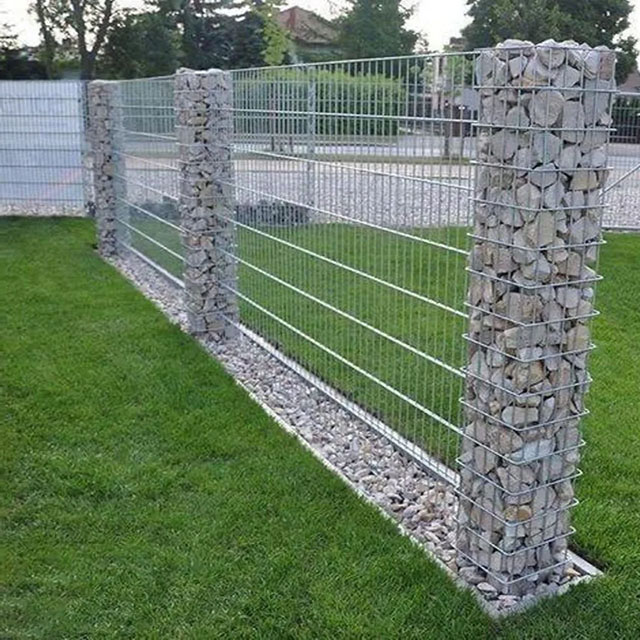
Selecting the correct alloy is an exercise in balancing lifespan against capital expenditure. Over-specifying drains the budget, while under-specifying guarantees early replacement.
Engineers must match the material properties to the environmental stressors. The following breakdown illustrates the trade-offs:
Plain/Carbon Steel: This option offers high tensile strength at the lowest cost point. However, it possesses zero natural corrosion resistance. It requires immediate coating, painting, or galvanizing upon installation. It serves best in dry, indoor structural applications or concrete reinforcement.
304 Stainless Steel: This is the industry standard T-304. It creates a passive oxide layer that resists oxidation. It performs adequately in indoor environments, freshwater applications, and general industrial settings where chemical exposure is mild.
316/316L Stainless Steel: Often termed the "Marine Premium," this grade includes 2-3% Molybdenum. This addition drastically improves resistance to pitting corrosion caused by chlorides. The 20-30% price markup over 304 is justified in saltwater environments, areas with heavy road salt exposure, or sterile pharmaceutical environments where cleaning chemicals are harsh.
For carbon steel applications requiring rust resistance, the galvanization process is critical. The timing of the zinc application relative to the welding process defines the product's integrity.
| Feature | GBW (Galvanized Before Welding) | GAW (Galvanized After Welding) |
|---|---|---|
| Process | Pre-galvanized wires are welded together. | Raw steel mesh is dipped in zinc after welding. |
| Weld Integrity | Welding burns the zinc off the joints, leaving them exposed. | The zinc coating seals the entire weld joint. |
| Cost | Lower cost. | Higher premium. |
| Best Use | Indoor animal cages, machine guards, dry storage. | Greenhouses, outdoor fencing, wet environments. |
Extreme environments require exotic solutions. In scenarios involving extreme heat or aggressive acids, stainless steel may fail. Alloys such as Monel (excellent for hydrofluoric acid) or Inconel (retains strength at high temperatures) are used in aerospace and petrochemical filters. These materials are significantly more expensive and typically require custom manufacturing runs.
Ambiguity in technical specifications is the primary cause of friction in B2B transactions. Procurement teams must use precise syntax to ensure the manufacturer quotes the correct material.
The most common error involves confusing "Mesh Count" with "Opening Size." These terms are inversely related but distinct.
Mesh Count: This refers to the number of openings per linear inch, measured from center to center of the wire. A "10 Mesh" product has ten openings per inch.
Opening Size (Aperture): This measures the actual open space between two parallel wires. It dictates the size of the particle that can pass through.
Decision Tip: If your application involves particle filtration, specify "Opening Size" (e.g., 0.5mm aperture). If you are designing for screening or aesthetic purposes, "Mesh Count" is the standard industry nomenclature.
Wire diameter affects both the strength of the mesh and its flow rate. Increasing the wire diameter (using a lower gauge number) adds mechanical strength and impact resistance. However, thicker wires occupy more space, reducing the "Open Area Percentage."
In filtration, a low open area restricts flow rates, causing pressure drops in the system. in architectural fencing, it reduces wind transparency, increasing the wind load on the support structure. Buyers must distinguish between "Micronic" mesh, used for fine fluid filtration invisible to the naked eye, and "Structural" hardware cloth designed for heavy-duty guarding.
The pattern in which wires interlace affects stability and density.
Plain Weave: The most common pattern where each wire passes over and under the next. It offers standard flow rates and high structural stability.
Dutch Weave: This utilizes a heavier warp wire and a finer shute wire driven close together. It creates a dense filter cloth capable of high pressure retention and fine filtration.
Intercrimp/Lock Crimp: These styles are used in coarse mesh. The wires are crimped before weaving to lock them in place, preventing the wires from shifting under heavy loads or vibration.
Not all suppliers are manufacturers. Distinguishing between a stocking distributor and a capable stainless steel wire mesh manufacturer is vital for complex engineering projects.
For precision engineering, material consistency is non-negotiable. Leading manufacturers adhere to the "Single Heat Lot" principle. This ensures that all rolls in a shipment come from the same batch of molten steel. Consequently, they possess identical tensile strength and elongation properties. This consistency is crucial for automated tensioning systems.
Buyers should also verify compliance with industry standards such as ASTM E2016 (Standard Specification for Industrial Woven Wire Cloth) and ISO quality management systems. These certifications prove the mesh meets strict tolerance levels regarding wire diameter and aperture uniformity.
Sourcing directly from a manufacturer with in-house fabrication capabilities reduces lead times and total costs. Generic distributors typically ship standard rolls. A manufacturer can offer value-added services such as cutting, circling, and calendering.
One critical service is "Flattening." Woven wire mesh typically retains the curve of the roll (coil set). Manufacturers can run the mesh through a flattening machine to break this memory, delivering flat panels ready for assembly. This solution prevents jamming in automated production lines, solving a major operational headache.
Assess the supplier's readiness. Do they stock standard 100-foot rolls of common grades (304, 316)? Or is every order a "Made-to-Order" (MTO) project with an 8-week lead time? A robust supplier maintains a deep inventory of master rolls, allowing for rapid deployment of standard specifications while reserving custom loom time for specialty alloys.
The physical characteristics of steel wire mesh make logistics a complex variable. Poor planning here can erode profit margins significantly.
Small parcel carriers like UPS and FedEx typically have a hard limit of 150 lbs. Wire mesh is dense; a single roll can easily exceed this. Furthermore, length limits often cap at 108 inches. Shipping heavy rolls via standard parcel services invites damage and surcharges.
LTL (Less Than Truckload) freight is the reality for most bulk orders. However, LTL carriers charge extra for lift gates and residential deliveries. The recommendation is to consolidate orders. Shipping four rolls on a single pallet costs marginally more than shipping one roll, as you are paying for the pallet space. Optimizing your order volume to fill a pallet maximizes your shipping ROI.
Quality control begins at the receiving dock. Upon arrival, inspect the shipment immediately. Look for "telescoping," where the center of the roll has slid out, cone-like, damaging the edges. Verify the edge condition; crushed edges make the outer inches unusable. Use a micrometer to verify the wire diameter matches your purchase order before signing the bill of lading.
Finally, consider the installation environment. A common failure mode is Galvanic Corrosion. This occurs when stainless steel mesh is secured with dissimilar metal fasteners, such as aluminum clips, in the presence of an electrolyte (water). The metals react, accelerating corrosion. Always use compatible fasteners or insulating washers to separate dissimilar metals during installation.
Successful procurement of industrial mesh in 2026 requires a strategic balance between alloy costs and failure risks. The market creates pressure to cut costs, but the physical reality of corrosion creates a hard floor for quality standards.
Final Verdict: For critical infrastructure, pharmaceutical, or marine applications, prioritize 316 Stainless Steel or GAW finishes. Demand MTRs to verify the chemistry. The upfront cost is an insurance policy against catastrophic failure. For temporary, dry, or non-critical applications, standard carbon steel or GBW mesh offers a better Return on Investment.
Next Steps: Before submitting an RFQ, gather your specific requirements. Define the Open Area percentage, required Flow Rate, and the Chemical Environment. With these details, you can engage a supplier to lock in accurate pricing and secure material availability.
A: Hardware Cloth is a specific subset of the category. It generally refers to galvanized, welded, coarse mesh used for industrial framing or heavy-duty outdoor applications. Wire Mesh is the broader term covering the entire spectrum, from heavy mining screens down to micron-level filtration cloth used in aerospace. Hardware cloth emphasizes structural rigidity, while wire mesh can be flexible.
A: The price difference lies in the chemistry. 316 stainless steel contains 2-3% Molybdenum. This element provides superior resistance to pitting corrosion, especially against chlorides and industrial solvents. Molybdenum is an expensive raw material. Its addition raises the base cost of the alloy, but it significantly extends the service life in harsh environments.
A: Stainless steel is "stain-less," not "stain-proof." It can develop "tea-staining" (brown surface discoloration) in coastal or high-salinity areas if the grade is too low (like 304). This is surface oxidation, not structural rotting. However, if exposed to chemicals incompatible with the alloy, severe pitting can occur. Proper passivation and electropolishing help maintain the passive layer.
A: The method depends on the coarseness. For coarse mesh (where you can easily see through it), measure from the center of one wire to the center of the next wire. For fine mesh, use a magnifier or a mesh counter. Count the number of openings that occur within one linear inch. Do not include the wire thickness in the opening size measurement.
A: It depends on the wire gauge. Fine mesh (similar to window screen) can be cut with heavy-duty scissors or tin snips. However, heavier gauge structural mesh or hardware cloth requires angle grinders, bolt cutters, or pneumatic shears. Attempting to cut heavy mesh with manual snips will damage the tool and leave jagged, dangerous edges.


