Galvanized steel grating is a versatile, high-performance building material widely used across industrial, commercial, and infrastructure projects. Its popularity stems from well-defined industry specifications that ensure consistency and a host of inherent benefits that address the demands of harsh operating environments. This article delves into the common specifications and primary advantages of galvanized steel grating.
Common Specifications of Galvanized Steel Grating
Galvanized steel grating specifications are standardized to meet diverse application needs, with key parameters governing its design, material, and manufacturing processes.
1. Material and Galvanization Standards
The base material of galvanized steel grating is typically carbon steel, most commonly low-carbon steel such as Q235 in Chinese standards or A36 in American standards. This steel grade offers excellent weldability and structural strength, making it ideal for load-bearing applications.
Galvanization is the defining feature of this product, and it adheres to strict industry standards. Hot-dip galvanization is the most prevalent process for corrosion protection of steel, which involves immersing the fabricated steel grating into a bath of molten zinc (usually at a temperature of 450–460 °C). According to international standards like ISO 1461, the minimum zinc coating thickness varies by application: for industrial-grade grating, the coating thickness should be no less than 85 μm, while for lighter-duty commercial applications, a thickness of 65 μm is acceptable. This coating ensures uniform coverage, even on welded joints and sharp edges.
2. Structural and Dimensional Specifications
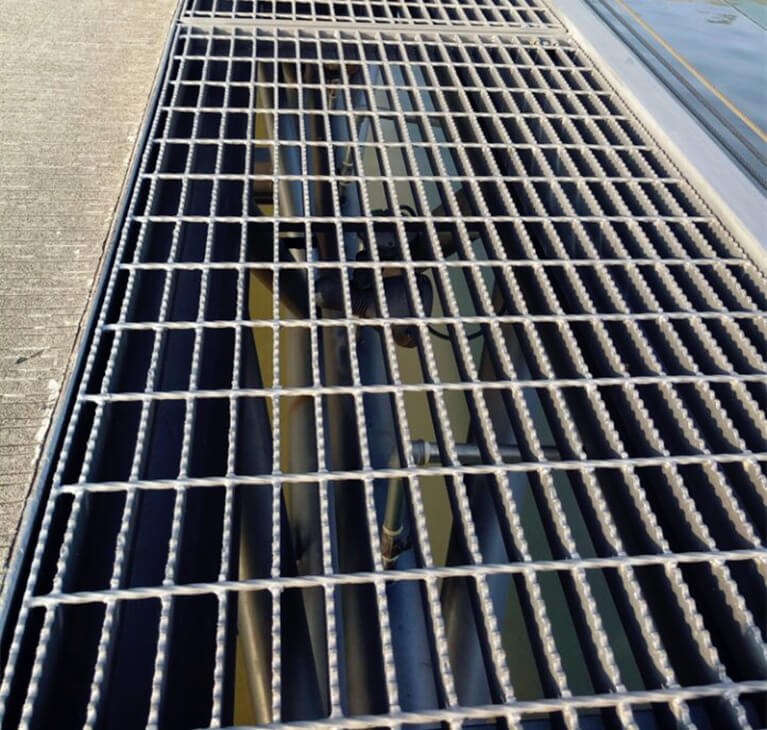
Galvanized steel grating is primarily categorized into two structural types: welded steel grating and pressure-locked steel grating.
Welded steel grating is manufactured by welding bearing bars (the primary load-carrying components) to cross bars at regular intervals. The bearing bars are typically rectangular or I-shaped, with common widths ranging from 20–60 mm and thicknesses from 3–8 mm. The spacing between bearing bars is usually 30 mm, 40 mm, or 60 mm, while cross bar spacing is commonly 50 mm, 100 mm, or 200 mm, depending on load requirements.
Pressure-locked steel grating is formed by cold-pressing bearing bars and cross bars together without welding, offering enhanced corrosion resistance at connection points.
In terms of dimensions, standard panel sizes range from 1 m × 2 m to 1.22 m × 3.66 m, which balances ease of transportation and on-site installation. Custom sizes are also available for specialized projects such as bridge walkways or platform flooring.
3. Load-Bearing and Safety Specifications
Load-bearing capacity is a critical specification, determined by factors like bearing bar size, spacing, and material grade. For example, a welded steel grating with 50 mm wide × 5 mm thick bearing bars and 30 mm spacing can withstand a uniformly distributed load of up to 5 kN/m², suitable for pedestrian walkways. Heavy-duty grating, designed for vehicle traffic, can support loads exceeding 20 kN/m².
Safety specifications require that galvanized steel grating has a non-slip surface. This is often achieved by using serrated bearing bars, which increase friction between the grating and footwear or vehicle tires, reducing slip risks in wet or oily environments. Additionally, the grating must comply with fall protection standards, with edge treatments like welded side plates to prevent objects from falling through gaps.
Primary Benefits of Galvanized Steel Grating
The combination of standardized specifications and galvanization technology endows this product with a range of advantages that set it apart from alternative materials like concrete or aluminum grating.
1. Superior Corrosion Resistance
The hot-dip zinc coating acts as a sacrificial anode, protecting the underlying steel from rust and corrosion. Even if the coating is scratched, the zinc surrounding the damaged area will continue to protect the steel substrate through cathodic protection. This makes galvanized steel grating suitable for use in harsh environments, including coastal areas with high salt content, chemical plants, wastewater treatment facilities, and outdoor infrastructure exposed to rain, snow, and humidity. Its service life can extend to 20–30 years with minimal maintenance, far exceeding the lifespan of uncoated steel grating.
2. High Structural Strength and Durability
Built to meet strict load-bearing specifications, galvanized steel grating offers exceptional strength-to-weight ratio. Compared to concrete slabs of the same load capacity, it is significantly lighter, reducing the overall structural load of buildings or platforms. At the same time, its rigid structure resists deformation, impact, and heavy loads, making it ideal for industrial applications such as factory floors, warehouse mezzanines, and crane runways. Unlike wood or plastic grating, it does not rot, warp, or degrade under heavy use.
3. Easy Installation and Low Maintenance
Galvanized steel grating is prefabricated into standard panels, allowing for quick on-site installation using bolts, clips, or welding. Its modular design eliminates the need for complex cutting or fitting on site, saving time and labor costs.
In terms of maintenance, galvanized steel grating requires almost no upkeep. Unlike painted steel, which needs regular repainting to prevent rust, the zinc coating maintains its protective properties for decades. In case of minor damage, simple touch-up with zinc-rich paint is sufficient to restore protection. This low maintenance requirement translates to long-term cost savings for project owners.
4. Excellent Drainage and Ventilation
The open grid structure of galvanized steel grating enables efficient drainage of liquids and debris. In outdoor areas, rainwater and snowmelt can pass through the gaps quickly, preventing water accumulation and ice formation. In industrial settings, it allows for the drainage of spills (such as oil or chemicals), reducing slip hazards and simplifying cleanup. Additionally, the open design promotes air circulation, making it suitable for use as flooring in areas requiring ventilation, such as machinery rooms or solar panel support structures.
Conclusion
Galvanized steel grating’s well-defined specifications—covering material quality, structural design, and load-bearing capacity—ensure its reliability across diverse applications. Its primary benefits, including superior corrosion resistance, high strength, easy installation, and excellent drainage, make it a cost-effective and durable solution for industrial, commercial, and infrastructure projects. As industries continue to prioritize safety, longevity, and sustainability, galvanized steel grating will remain a preferred choice for engineers and project managers worldwide.


