
Views: 0 Author: Site Editor Publish Time: 2026-08-18 Origin: Site


Wastewater treatment plants operate under some of the most aggressive environmental conditions found in any industrial sector. Continuous moisture, biological byproducts, and microbial-induced corrosion rapidly degrade standard infrastructure materials. When you expose raw steel to hydrogen sulfide and harsh chemical dosing, deterioration accelerates exponentially. Premature structural failure of walkways, platforms, and trench covers creates severe safety hazards for plant operators. It triggers immediate OSHA compliance violations and forces unplanned facility downtime for emergency repairs. Specifying the correct steel grating for wastewater treatment requires a rigorous evaluation of corrosion resistance, load-bearing capacity, and surface traction. Facility engineers must balance these technical specifications to ensure long-term operational reliability across different treatment zones. You cannot rely on a one-size-fits-all approach when designing pedestrian and vehicular access platforms in these facilities.
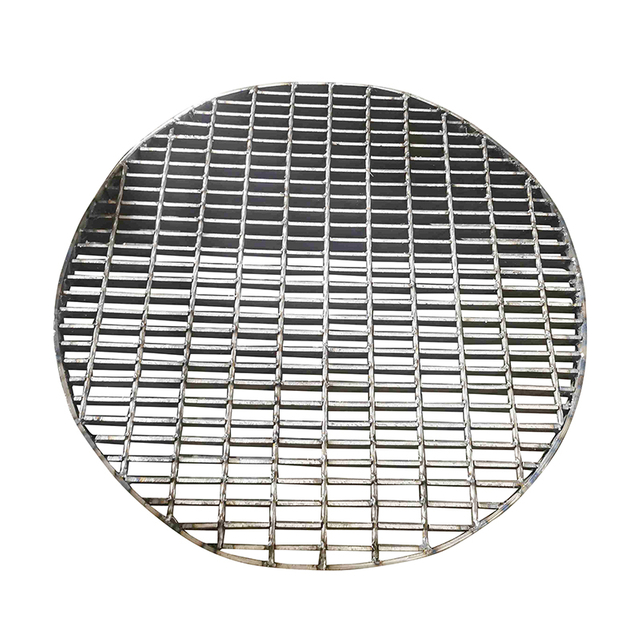
Material selection dictates lifecycle: The choice between hot-dip galvanized carbon steel, 300-series stainless steel, and specialized coatings must be mapped directly to the specific chemical exposure zones within the plant.
Safety compliance is non-negotiable: Serrated surface profiles, proper bar spacing, and integrated toe plates are critical for maintaining slip resistance in continuously wet environments and meeting stringent OSHA standards.
Installation methodology impacts longevity: Improper anchoring, unsealed field cuts, or pairing dissimilar metals can introduce galvanic corrosion, negating the benefits of high-grade steel grating.
Table of Contents
Wastewater facilities expose structural metals to a relentless combination of chemical and biological attacks. Hydrogen sulfide (H2S) gas presents the most pervasive threat in the primary treatment phases. When H2S contacts moist surfaces, it converts into sulfuric acid. This acid aggressively attacks raw carbon steel and rapidly depletes standard zinc protective coatings. You will see this degradation firsthand on the underside of walkways spanning primary clarifiers. Chlorine and ferric chloride, commonly utilized in chemical dosing areas, introduce highly reactive chlorides. These chlorides cause rapid pitting in lesser alloys, compromising the structural cross-section of the bearing bars. Continuous moisture exacerbates these chemical reactions across all plant zones, turning minor surface scratches into deep corrosion pits.
Microbial-Induced Corrosion (MIC) introduces a severe biological threat that many engineers underestimate. Thiobacillus bacteria thrive in areas with heavy sludge and biological activity. These microorganisms excrete localized acids that eat through metal infrastructure at an alarming rate. Exposure severity varies significantly across different plant zones. Headworks, grit chambers, and primary clarifiers endure the highest concentrations of raw sewage and abrasive materials. Secondary aeration basins expose grating to constant oxygenation and moisture, creating a perfect storm for oxidation. Administrative and perimeter zones face milder, atmospheric exposure, but still require baseline protection against ambient moisture.
Structural integrity depends entirely on matching the grating specification to anticipated traffic loads. Pedestrian walkways require grating engineered to support a uniform load of at least 100 pounds per square foot. These areas must safely accommodate plant operators carrying heavy tools, replacement valves, and maintenance equipment. You cannot undersize the bearing bars just to save weight. Trench covers demand significantly higher capacities. Areas accessible to vehicular traffic or heavy maintenance equipment require H-20 or HS-20 load ratings. These ratings ensure the grating can support the 32,000-pound axle weight of fully loaded vacuum trucks and mobile cranes used during sludge removal operations.
Deflection limits dictate worker safety and structural longevity. Industry standards mandate a maximum allowable deflection of 1/4 inch under uniform load. Excessive deflection creates a trampoline effect underfoot. This movement compromises worker confidence and introduces severe trip hazards when adjacent panels deflect at different rates. Repeated dynamic deflection also accelerates metal fatigue at the welded joints. It ultimately leads to cracked welds, premature structural failure, and mandatory replacement. When you walk across a poorly specified platform, you can feel the bounce. That bounce is the sound of the grating slowly tearing itself apart.
OSHA enforces strict requirements for walking and working surfaces in continuously wet, oily, or sludge-prone conditions. Standard plain-surface grating becomes dangerously slick when coated in wastewater byproducts, polymer spills, or grease. Facilities must implement engineered slip resistance to protect operators during routine maintenance and washdowns. Serrated bearing bars provide the necessary traction to grip heavy rubber work boots in these hazardous conditions. The serrations cut through the surface sludge, allowing the boot tread to make solid contact with the steel.
Fall protection mechanisms are mandatory around elevated platforms and open treatment vats. Integrated kick plates, commonly known as toe boards, prevent tools, hardware, and debris from falling into the basins below. A dropped wrench can severely damage expensive submersible pumps and aeration equipment, leading to massive repair bills. Proper grating design incorporates these 4-inch vertical safety plates directly into the fabricated panels. This integration ensures full compliance with OSHA fall protection mandates and protects critical machinery from foreign object damage.
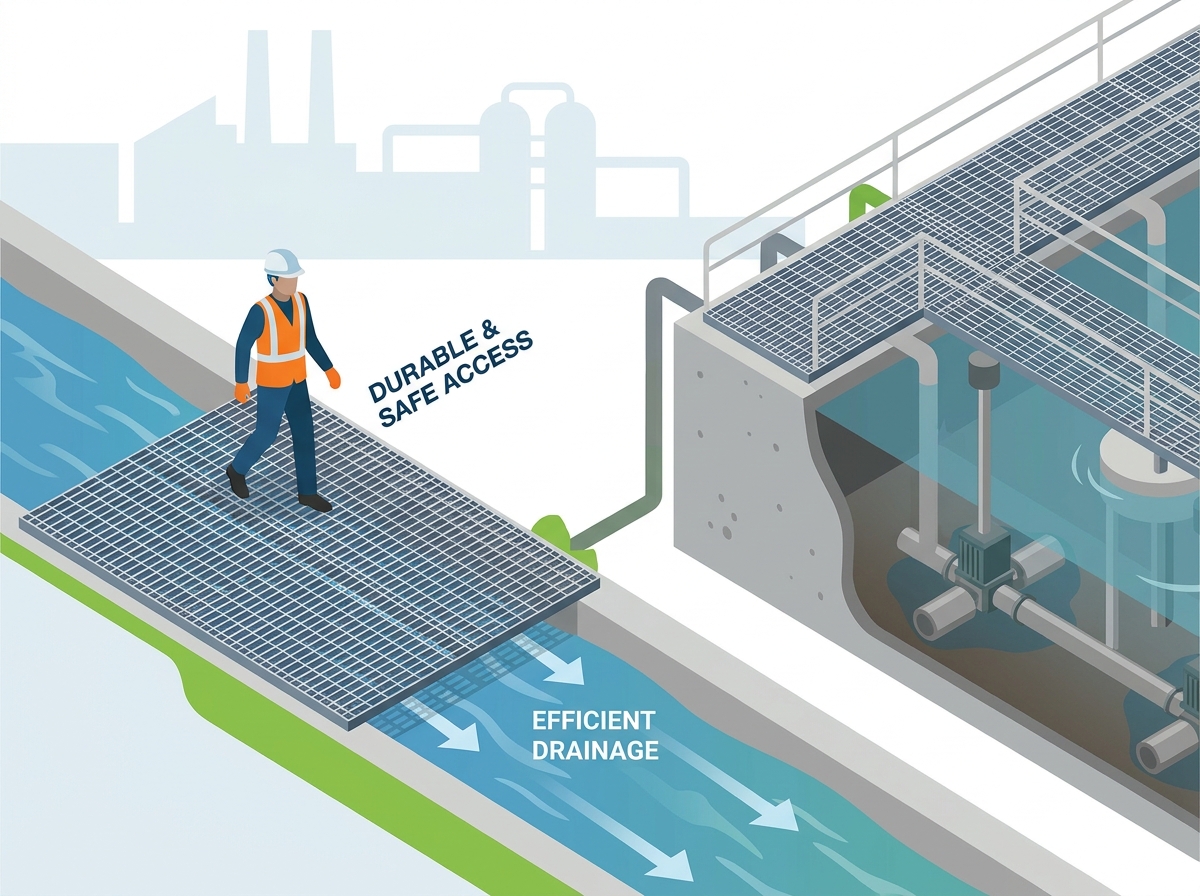
Hot-dip galvanized carbon steel remains a foundational material for industrial infrastructure. It offers an exceptionally high strength-to-weight ratio and broad availability. The galvanizing process immerses the fabricated steel panel in molten zinc, creating a thick metallurgical bond. This zinc layer acts as a sacrificial anode. It protects the underlying carbon steel from atmospheric moisture by corroding first. The material provides excellent structural rigidity for heavy-duty applications and spans long distances without requiring excessive support steel.
However, zinc coatings eventually deplete in highly acidic environments. Continuous exposure to H2S gas or submerged conditions accelerates this depletion. Once the zinc barrier fails, the underlying carbon steel rusts rapidly, flaking off in large scales. Hot-dip galvanized grating serves best in perimeter walkways, administrative zones, and secondary treatment areas. These zones present lower corrosive exposure, allowing the galvanized coating to achieve its expected lifespan. Never specify galvanized steel for submerged applications or directly above raw sewage channels.
Stainless steel delivers exceptional inherent corrosion resistance without relying on sacrificial coatings. Type 304 stainless steel provides excellent protection against general moisture and mild chemicals. It works well in secondary treatment areas where H2S concentrations are low. Type 316 stainless steel incorporates molybdenum into its alloy matrix. This specific addition offers superior protection against chlorides and harsh chemical dosing areas. It resists pitting and crevice corrosion in the most aggressive plant environments, maintaining its structural integrity for decades.
Installers must exercise caution to prevent the galling of stainless steel fasteners during installation. When you thread a stainless nut onto a stainless bolt under load, friction can cause the threads to cold-weld together. Proper lubrication and torque control mitigate this risk. Type 316 stainless steel represents the optimal choice for headworks, primary clarifiers, and chemical storage areas. It excels in sludge dewatering zones and direct-contact or submerged applications where galvanized metals fail rapidly.
Advanced protective coatings provide an additional barrier over carbon steel. High-build epoxy and polyurethane systems bridge the performance gap between standard galvanized and stainless steel. These coatings seal the metal from moisture and chemical contact. They offer specific resistance profiles tailored to different chemical exposures within the plant. Surface preparation is everything here. The steel must be abrasive blasted to a near-white metal finish before coating application to ensure proper adhesion.
These coatings are highly susceptible to mechanical damage. Dropped tools, dragged equipment, or heavy foot traffic can chip or scratch the surface. This damage exposes the underlying steel, leading to localized under-film corrosion. The rust spreads beneath the coating, causing it to blister and flake off in large sheets. Coated grating suits intermediate exposure zones. It functions well where standard galvanizing is insufficient, provided the area sees minimal heavy mechanical impact.
Fiberglass Reinforced Plastic (FRP) serves as the primary alternative to metallic grating. FRP offers absolute immunity to rust and galvanic corrosion. It resists a wide spectrum of acids and bases found in wastewater treatment. The material is lightweight and easy to cut on-site without requiring hot work permits. Many facilities use FRP in highly corrosive, low-traffic areas.
Despite its corrosion resistance, FRP exhibits significantly lower stiffness than steel. It deflects much more under heavy loads, requiring closer support spans to prevent a bouncy walking surface. FRP is also susceptible to UV degradation over time. Sunlight causes the resin to chalk, exposing the underlying fiberglass strands and weakening the panel. Steel provides superior load capacity, impact resistance, and fire safety. Steel grating remains the mandatory choice for areas requiring vehicular access, heavy equipment support, or strict fire-rating compliance.
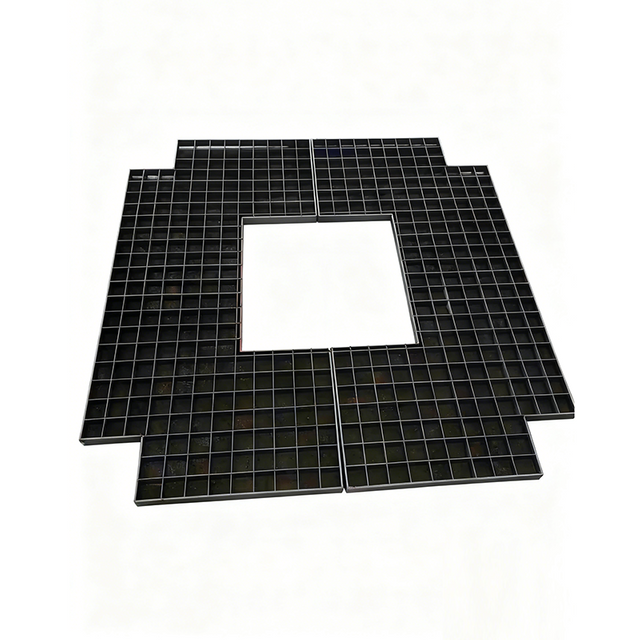
Specifying the correct bearing bar depth and thickness requires careful analysis of manufacturer load tables. These tables map the bar dimensions against required clear spans and anticipated traffic. A deeper bearing bar increases the load capacity exponentially. Standard industrial grating typically utilizes a 19-W-4 configuration. This designation indicates 1-3/16 inches between bearing bars and 4 inches between cross bars. This spacing provides an optimal balance of strength, weight, and open area for general plant access.
Close-mesh spacing becomes necessary in specific operational zones. Configurations like 11-W-4 or 7-W-4 meet ADA compliance standards for public-access areas. These tighter meshes prevent high heels or walking canes from catching in the grid. In industrial zones, close-mesh grating prevents small tools and hardware from dropping through the walkways. This specification protects personnel working below and prevents foreign object damage to submerged pumps. You will often see close-mesh grating installed directly over open clarifier tanks for this exact reason.
Wastewater grating must maintain a high open area percentage. Specifying grating with an 80% or greater open area allows water, sludge, and debris to pass through freely. This prevents the dangerous accumulation of biological waste on the walking surface. A high open area also facilitates adequate ventilation. It prevents the buildup of hazardous, explosive gases below the platforms, allowing HVAC systems to properly exhaust the facility.
Proper open grid design ensures self-cleaning capabilities. Rainwater and high-pressure facility washdowns easily flush contaminants through the grating. In colder climates, this open design prevents the dangerous accumulation of ice. The structural grid cuts through snow underfoot, maintaining a safe walking surface during winter operations. Solid plates or diamond tread flooring trap ice and sludge, creating massive slip hazards that open grating naturally avoids.
Welded grating represents the standard for heavy loads and industrial traffic. The manufacturing process forge-welds the cross bars directly into the bearing bars under intense heat and pressure. This creates a highly durable, single-piece panel. The welding process introduces heat-affected zones that require proper passivation or hot-dip galvanizing to restore corrosion resistance. Welded grating provides maximum lateral stability under dynamic loads, making it the only choice for vehicular trench covers.
Press-locked grating utilizes extreme hydraulic pressure to lock the cross bars into slotted bearing bars. This method offers a cleaner aesthetic and completely avoids welding heat. It eliminates the heat-affected zones that can initiate premature corrosion. However, press-locked grating exhibits lower lateral stability under extreme dynamic loads or heavy vehicular turning forces. It serves best in pedestrian and architectural applications within the plant where heavy equipment access is restricted.
Engineers must evaluate plain versus serrated bearing bars for every application. Plain bars offer a smooth surface that is easier to clean with a squeegee or pressure washer. However, they become severe slip hazards when coated in wastewater, polymers, or oil. Plain grating should only be specified for dry, indoor administrative areas where spills are highly unlikely.
Serrated profiles must be the default specification for all primary wastewater treatment applications. The serrations provide aggressive traction that cuts through sludge and grease. This inherent slip resistance protects operators during washdowns and routine maintenance. The safety benefits of serrated grating far outweigh the minor increase in cleaning difficulty. When an operator is pulling a heavy pump motor in the rain, serrated grating provides the necessary footing to prevent catastrophic falls.
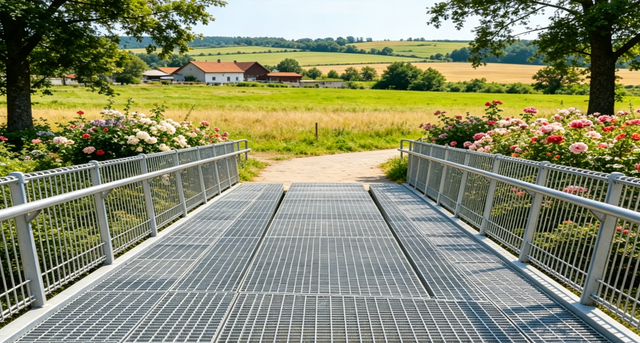
Wastewater facilities require complex grating layouts to accommodate existing infrastructure. Engineering requirements dictate precise custom cutouts around pipes, valves, and structural columns. Field-cutting these penetrations compromises the structural integrity of the panel. Factory fabrication ensures all cutouts receive proper edge banding. Banding welds a steel bar around the perimeter of the cutout, restoring the load-bearing capacity and preventing the cut bearing bars from buckling under load.
Operational efficiency demands the integration of hinged access hatches. These hatches allow rapid access for pump maintenance and debris removal without requiring a crane to lift heavy grating panels. Hatches must include safety grates and hold-open mechanisms to protect workers from falling into the opening. Welded toe plates are critical around all perimeters and penetrations. These vertical plates prevent objects from rolling off the platform and falling into the treatment basins.
Comparison of Steel Grating Materials for WWTP Zones | |||
Material Type | Corrosion Resistance | Load Capacity | Optimal WWTP Zone |
|---|---|---|---|
Hot-Dip Galvanized Steel | Moderate (Sacrificial) | Excellent | Perimeter walkways, administrative areas |
Type 304 Stainless Steel | High (Inherent) | Excellent | Secondary aeration, general moisture zones |
Type 316 Stainless Steel | Exceptional (Chloride Resistant) | Excellent | Headworks, primary clarifiers, chemical dosing |
Epoxy Coated Steel | High (Barrier) | Excellent | Intermediate zones with low mechanical impact |
Improper fastening presents a severe operational risk. Loose grating causes immediate trip hazards for plant personnel. Dynamic loads from foot traffic and equipment cause unanchored panels to shift and bounce. This movement induces structural fatigue at the support joints and generates excessive noise. Over time, loose panels can dislodge completely, creating dangerous open holes in the walkway. You cannot rely on gravity to hold grating in place in an industrial facility.
Mitigation requires specifying appropriate anchoring hardware. Standard friction clips often fail under heavy vibration. Specify mechanical saddle clips, weld lugs, or specialized grating fasteners rated for high-vibration environments. Areas near heavy pumps, aerators, and centrifuges require positive mechanical attachment. Regular maintenance schedules must include torque checks on all grating fasteners to ensure long-term stability.
Galvanic corrosion occurs when two dissimilar metals make physical contact in the presence of an electrolyte. Installing stainless steel grating directly onto carbon steel structural supports creates a galvanic couple. The continuous moisture and chemical makeup of wastewater act as a highly conductive electrolyte. This reaction accelerates the degradation of the carbon steel supports, threatening the entire platform's structural integrity. The grating will survive, but the beams holding it up will rot away.
Mitigation requires strict isolation protocols. You must require the use of isolation pads between dissimilar metals. Neoprene, Teflon, or high-density elastomer pads break the electrical conductivity between the grating and the supports. Installers must also use compatible fasteners. Using carbon steel bolts on stainless steel grating introduces localized galvanic cells that will rust rapidly, staining the stainless steel and eventually failing under load.
Unplanned field modifications destroy the protective coatings on steel grating. Cutting galvanized grating on-site exposes raw carbon steel to the corrosive atmosphere. Immediate rusting follows, compromising the panel's lifespan. Furthermore, cutting bearing bars without installing proper edge banding severely weakens the grating's load capacity. The panel can no longer support its designed weight, creating a hidden structural deficit.
Mitigate this risk by mandating factory-fabricated cutouts. The manufacturer must install welded edge banding and apply proper hot-dip galvanizing after all fabrication is complete. When field cuts are absolutely unavoidable, enforce strict repair protocols. Technicians must mechanically clean the cut edges and apply multiple coats of a high-zinc cold-galvanizing compound to restore a baseline level of protection.
Conduct a comprehensive site corrosion audit across all treatment zones to identify specific chemical and biological threats before specifying materials.
Request physical material samples from suppliers for on-site exposure testing in your most aggressive environments, such as headworks and chemical dosing areas.
Consult with a licensed structural engineer to finalize bearing bar depth, thickness, and spacing based on anticipated pedestrian and vehicular traffic loads.
Specify factory fabrication for all cutouts, penetrations, and edge banding to eliminate unsealed field cuts and maintain structural integrity.
For wastewater treatment and other demanding industrial projects, working with an experienced grating manufacturer can help ensure that material selection, structural design, and fabrication match the actual operating environment. Foshan Tianhe Steel Grating Co., Ltd specializes in the research, development, and large-scale production of steel grating, trench covers, steel ladders and handrails, fencing, and related fabricated products, supported by grating design capabilities and production equipment.
A: The optimal material depends on the specific plant zone. Type 316 stainless steel is best for highly corrosive areas like headworks and chemical dosing. Hot-dip galvanized steel performs well in milder perimeter and administrative zones. Material selection must align with local chemical and moisture exposure.
A: Lifespan varies heavily by exposure. In mild, dry administrative zones, galvanized grating can last decades. In highly acidic areas or zones with continuous hydrogen sulfide (H2S) exposure, the zinc coating can deplete rapidly, leading to rust within a few years.
A: OSHA requires walking-working surfaces to be safe under foreseeable conditions. In wet, oily, or sludge-prone wastewater environments, standard plain grating is insufficient. Serrated bearing bars are strongly recommended to provide the necessary traction and ensure compliance with slip-resistance mandates.
A: The best method is to avoid field cuts entirely by specifying factory-fabricated panels. If field cutting is unavoidable, the raw steel edges must be mechanically cleaned and heavily coated with a zinc-rich cold-galvanizing compound to restore localized protection.
A: Standard pedestrian grating cannot support vehicular loads. Areas requiring vacuum truck or heavy equipment access must be specified with heavy-duty grating engineered to meet H-20 or HS-20 load ratings. This requires deeper, thicker bearing bars and specialized structural supports.
A: Galvanic corrosion occurs when stainless steel touches carbon steel in a wet environment. Prevent this by installing non-conductive isolation pads, such as neoprene or Teflon, between the stainless steel grating and the carbon steel structural supports.


